

MOR FATI, Zenobie x La Terre est Folle, Capsule Collection, 2025
AMOR FATI
It takes a lot of stoicism to move through the world today, especially in our region, where instability and deep rooted trauma have shaped individual lives and entire generations. Does our fate reside in some sort of limbo of piled up violent events and ephemeral lights of hope?
At Zenobie, we often find ourselves sitting in front of a blank artboard, contemplating the purpose behind the new graphics and illustrations that will speak to our community. The question becomes: how do we make sense of what we endure? How do we keep going, when everything around us feels uncertain?
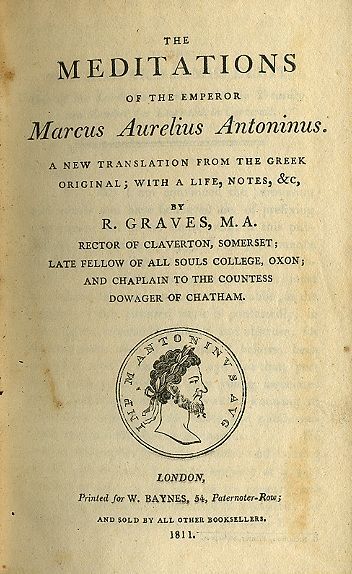
“Welcome every experience the looms of fate may weave for you. Why? Because you are here to meet it, to bear it, and to transform it into something useful.”
— Paraphrased from Meditations, Marcus Aurelius Book 7
And then, an eureka moment arises where two powerful words resonate: Amor Fati.
The philosophy of amor fati, meaning “love of fate”, speaks directly to our kind of
resilience. It’s about accepting the events of life, good or bad, not with resignation, but
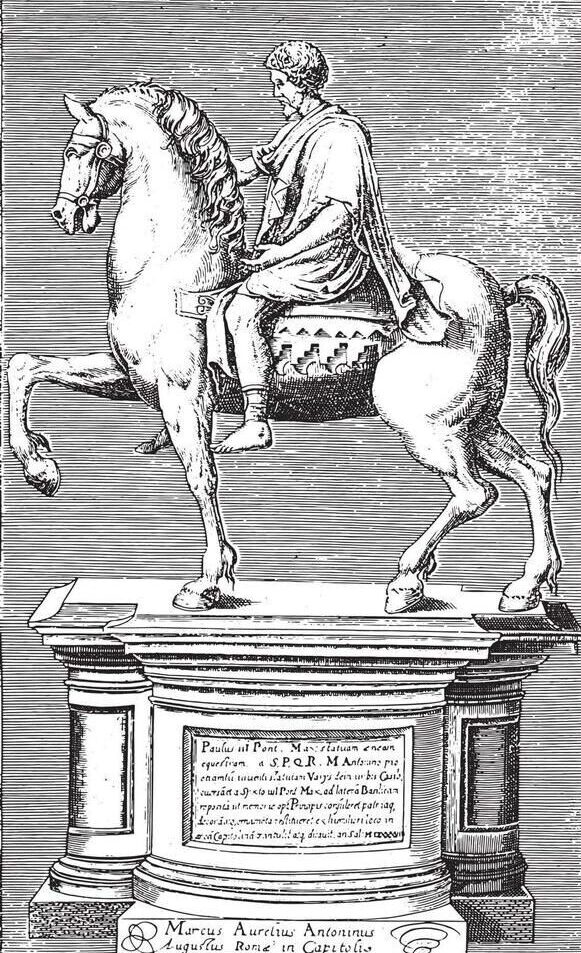
with intention. As the Stoic emperor Marcus Aurelius once wrote:
“A blazing fire makes flame and brightness out of everything that is thrown into it.”
The Diary of Frida Kahlo: An Intimate Self-Portrait, 1995
An Interview with Lina Khoury on the Transformative Power of the 5 Year Memory Journal
Q. How important are fostering habits for our growth and mental health?
Lina: Fostering consistent habits, especially reflective ones like journaling is foundational for mental health and personal growth. Habits create stability, and in a world, full of change, they become our anchors. When we build a habit of checking in with ourselves, we develop self-awareness and emotional regulation.
For me, journaling started as a habit when I was just 12 years old. It wasn’t just a routineit was a way to cope, to reflect, and to make sense of what I felt. I saw how powerful habits can be by observing my older brother. He was 9 years older than me, and I still remember seeing him pour his thoughts onto paper, especially when he was angry or overwhelmed. That simple ritual of writing before sleep, the way he protected his journal with a lock, showed me how sacred our inner world can be.
That early exposure to the habit of journaling shaped the way I processed my own emotions growing up—and eventually influenced the way I help others today.
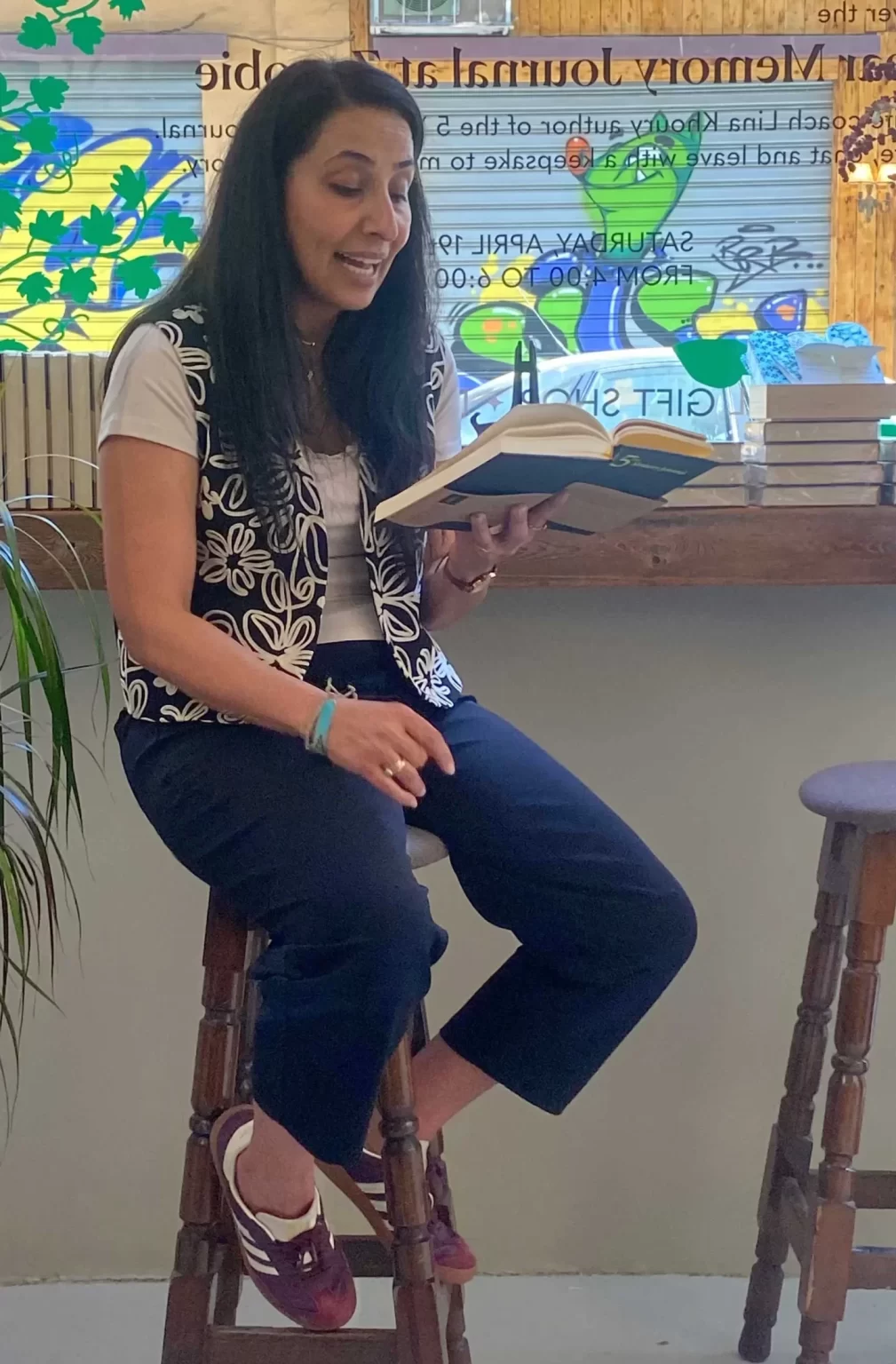
Lina reading a exert from the 5 Year Memory Journal at Zenobie, 2025
Q. Journaling is an activity that requests courage. Most of the time we end up facing our deepest thoughts and we might look down upon ourselves. As a psychotherapist, what do you have to say to the person confiding in their journal to encourage them not to give up?
Lina: Journaling is a courageous act. It’s like holding up a mirror when no one else is watching. And yes, sometimes what we see isn’t easy. We may judge ourselves, feel shame, or even want to avoid the truth altogether.
To anyone who’s opening up to their journal: please know that growth starts where discomfort lives. The fact that you’re writing means you’re trying to understand yourself, and that’s something to be proud of, not ashamed of.
Your journal doesn’t judge you. It welcomes all parts of you. Your fears, your doubts, your anger, your hope. Keep going, even when it feels hard. You’re not writing to be perfect, you’re writing to be real. And real is what heals.
Q. At what age do you think we should start journaling?
Lina: Honestly, I think there’s no “too young” for journaling. It doesn’t have to be polished or profound, it just needs to be honest. I started journaling at 12, but the inspiration came years before. I grew up watching my brother, who was 9 years older than me, write in his journal daily.
He used it when he was overwhelmed, when he was angry, and I remember seeing him sit in silence before bedtime, putting pen to paper as a kind of nightly ritual. His journal had a lock on it, and that only added to its mystery and importance in my eyes. Watching him treat his thoughts with such care made journaling feel like a sacred space, not just a notebook, but a companion.
That early exposure made me curious, and eventually I picked up my own notebook. And I’ve never stopped. So yes, the earlier the better. If children or teens can begin expressing themselves through writing, even in simple ways, they start building emotional literacy, and that’s a skill for life.
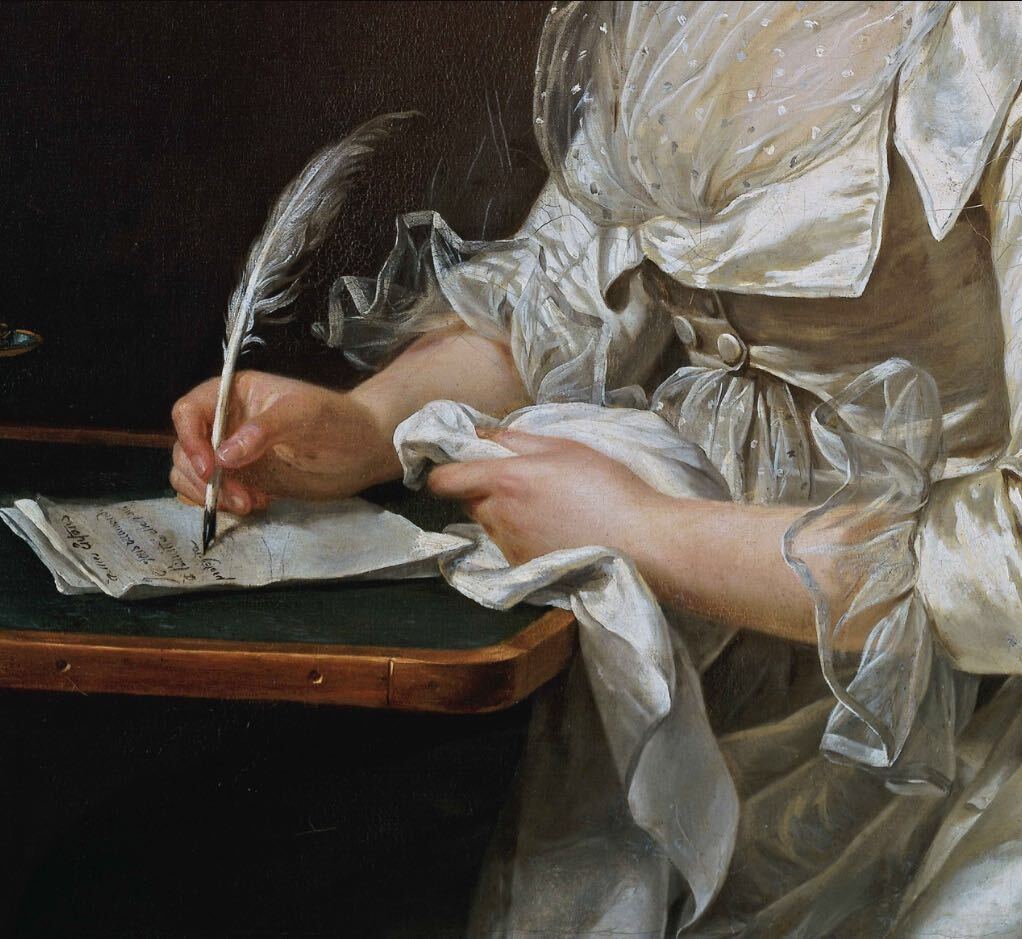
“Portrait of a Woman”, 1787, Attributed to Adélaïde Labille-Guiard
Q: What makes daily journaling such a powerful practice for our mental health and well-being?
Lina: Daily journaling has been praised for decades by psychologists and authors alike as a tool for processing emotions, reducing anxiety, and boosting self-awareness.
According to James Pennebaker, a social psychologist and researcher at the University of Texas, expressive writing can significantly reduce stress and improve immune function.
Renowned author Julia Cameron, in her book The Artist’s Way, calls daily journaling (“morning pages”) a gateway to creativity and emotional clarity.
Journaling gives us the space to untangle thoughts, observe patterns, and feel more in control of our inner world.
Q: How is the 5 Year Memory Journal different from other journals on the market?
Lina: While traditional 5-year journals exist, they often come with blank pages and no structure. Other types of journals typically focus on one niche: gratitude, food logging, fitness tracking, or daily planning.
The 5 Year Memory Journal offers something unique — guided prompts that touch every area of life, from relationships to personal growth, from mental health check-ins to moments of joy.
It’s more than a diary — it’s a companion that helps you process, reflect, and grow, without ruminating or getting stuck in repetitive thinking.
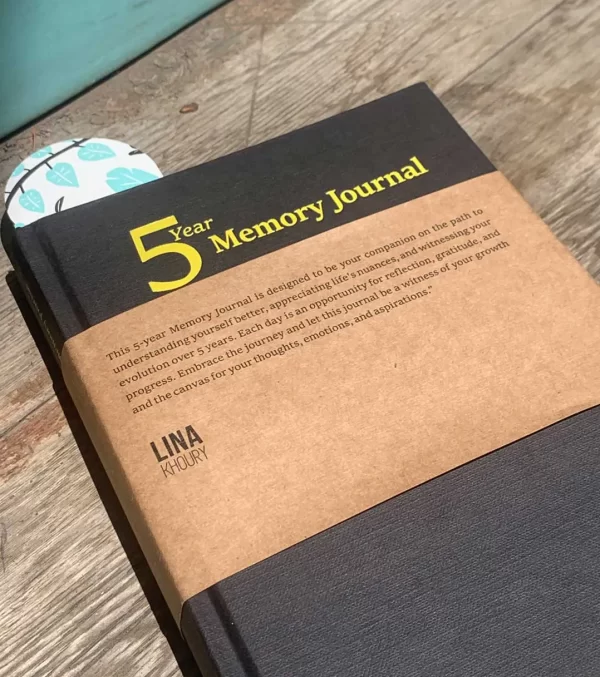
5 Year Memory Journal with our Zenobie Bookmark
Q: Why five years? Isn’t that too long?
Lina: On the contrary, the five-year timeline is where the magic happens. What makes this journal truly special is when you open it in year three and see what you wrote exactly two years ago — your thoughts, fears, dreams, and how you felt about a certain situation. You start noticing growth, healing, and evolving mindsets. It’s like building a personal time capsule that offers perspective and encouragement year after year.
Q: What kind of prompts can people expect in this journal?
Lina: It’s for anyone who wants to create a habit of self-reflection without feeling overwhelmed. Whether you’re navigating change, building healthier routines, exploring your purpose, or simply trying to stay grounded — this journal meets you where you are. And because it only takes a few minutes a day, it’s sustainable even for the busiest minds.
Q: Who is this journal for?
Lina: The prompts are intentionally designed to rotate through all aspects of life. You might answer:
“What’s one thing that gave you peace today?”
“What’s a belief you’re questioning lately?”
“How did you show up for yourself this week?”
“What’s one thing you’re avoiding, and why?”
“Who do you feel grateful for right now?”
These aren’t just feel-good questions — they are tools for mental hygiene, helping users develop insight, resilience, and intention.
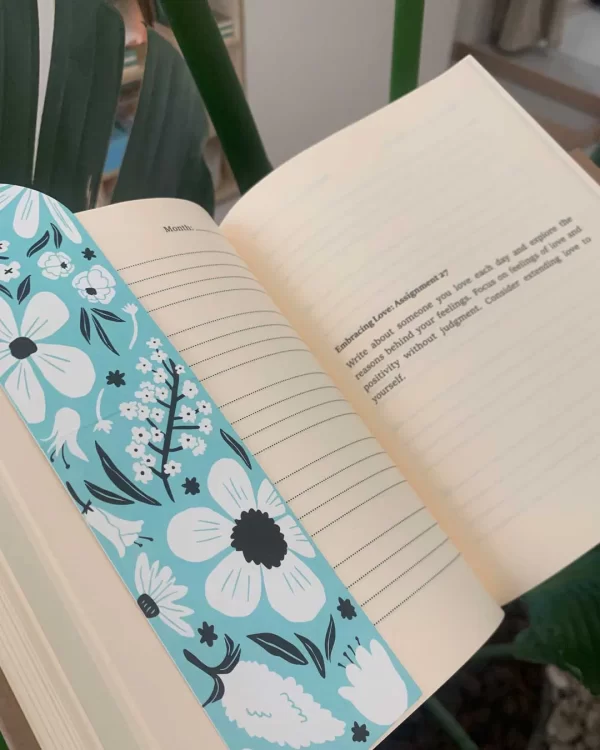
5 Year Memory Journal with our Zenobie Bookmark
Closing Thought:
Journaling isn’t just about recording memories. It’s about understanding them, learning from them, and noticing how far you’ve come. The 5 Year Memory Journal is your mirror, your map, and your cheerleader — all in one place.
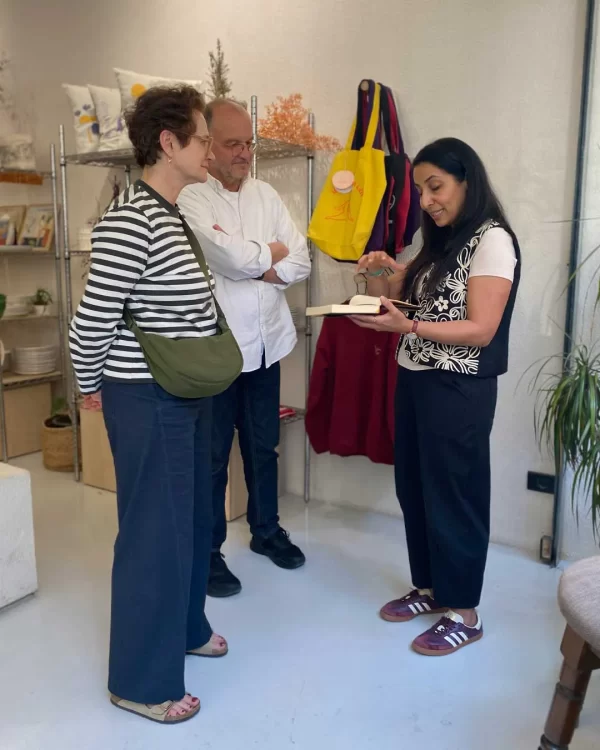
Lina at the “5 Year Memory Journal” event at Zenobie, April 2025
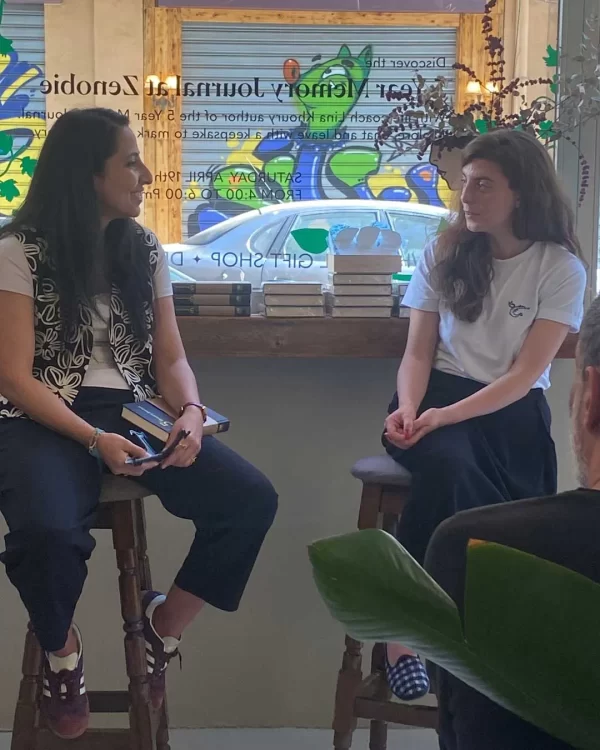
Lina and Zeina discussing the importance of Journaling at the “5 Year Memory Journal” event at Zenobie, April 2025
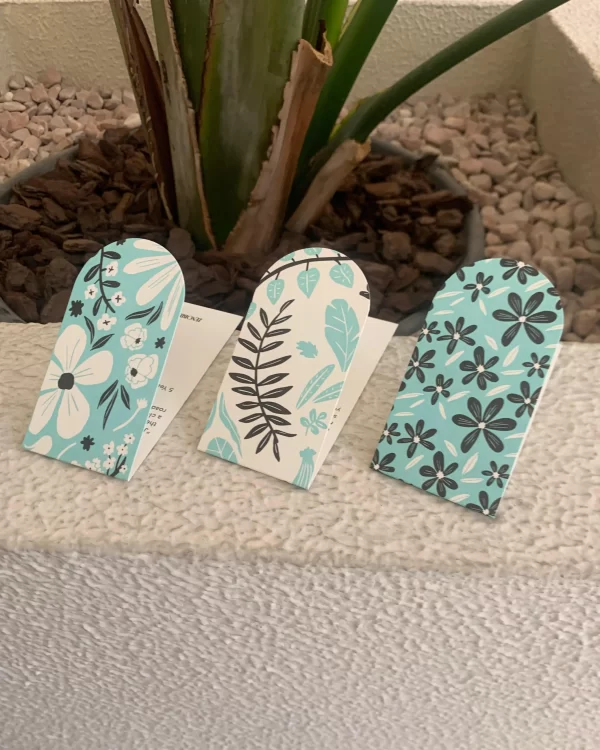
Part of the Sales of our Bookmarks will go to Our El Nour (a Lebanese NGO)
Oil on Canvas, Portrait of Benjamin Franklin, 1767, by David Martin
Planning
A simple word, yet it holds the key to turning dreams into reality. Throughout history, creators and entrepreneurs have used planning to bring their visions to life. The world as we know it exists because of the continuous efforts of individuals working methodically towards their goals. Planning aligns efforts, unites objectives, and paves the way for success.
Below, we highlight five individuals who shaped our world and were renowned for their exceptional planning.
In a World of Science and Invention…
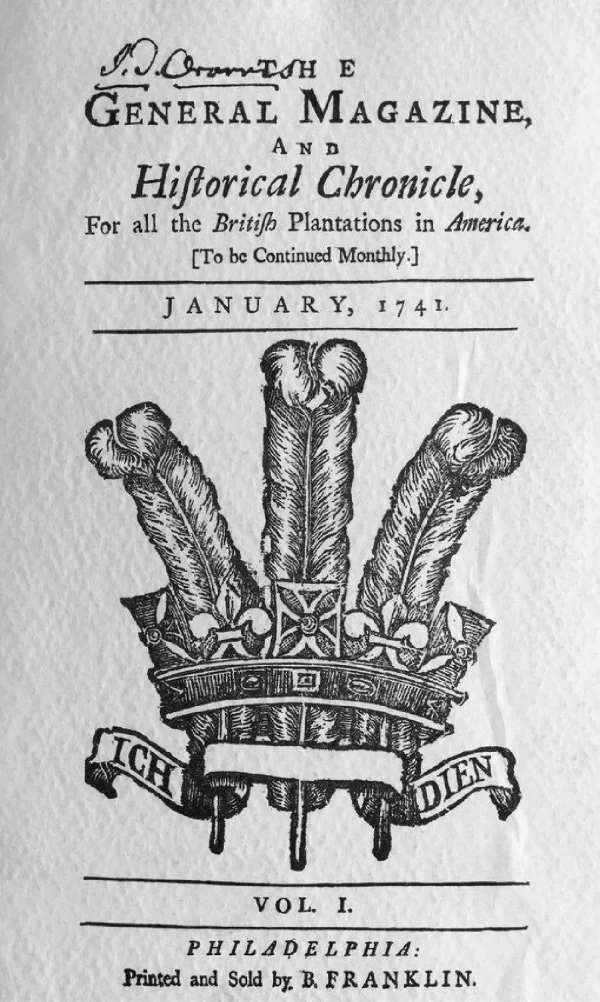
Benjamin Franklin’s Journal
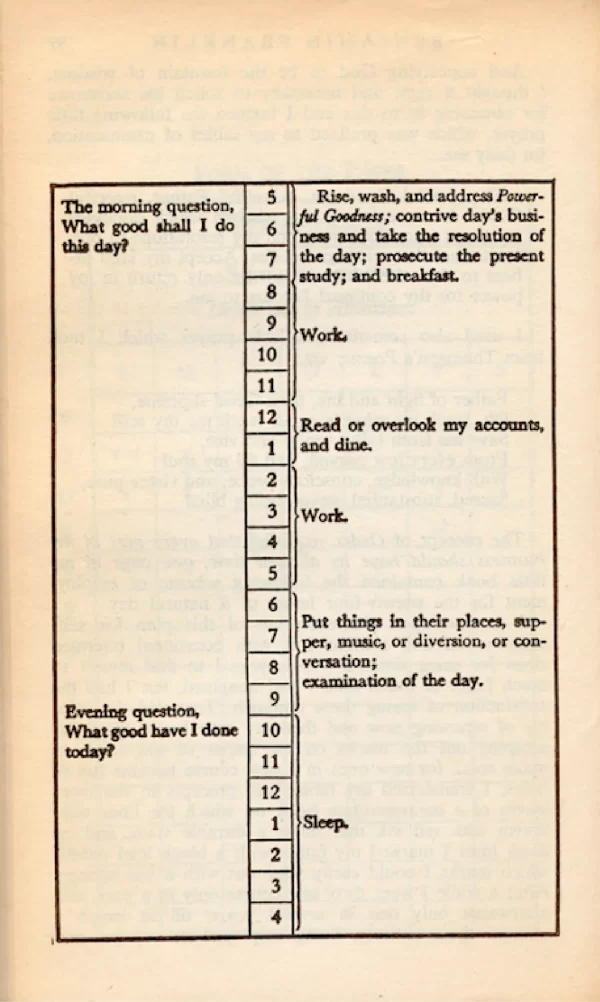
Benjamin Franklin’s Daily Schedule
Benjamin Franklin
Benjamin Franklin’s journals are legendary, filled with grids and schedules, aspirations and reflections. I can almost see him at his desk, candlelight flickering as he plans his day with the precision of a craftsman. Morning routines, virtues to cultivate, goals to achieve, Franklin reminds us that planning isn’t just about doing, it’s about becoming. It’s about instating habits that shape us into better versions of ourselves.
Leonardo da Vinci
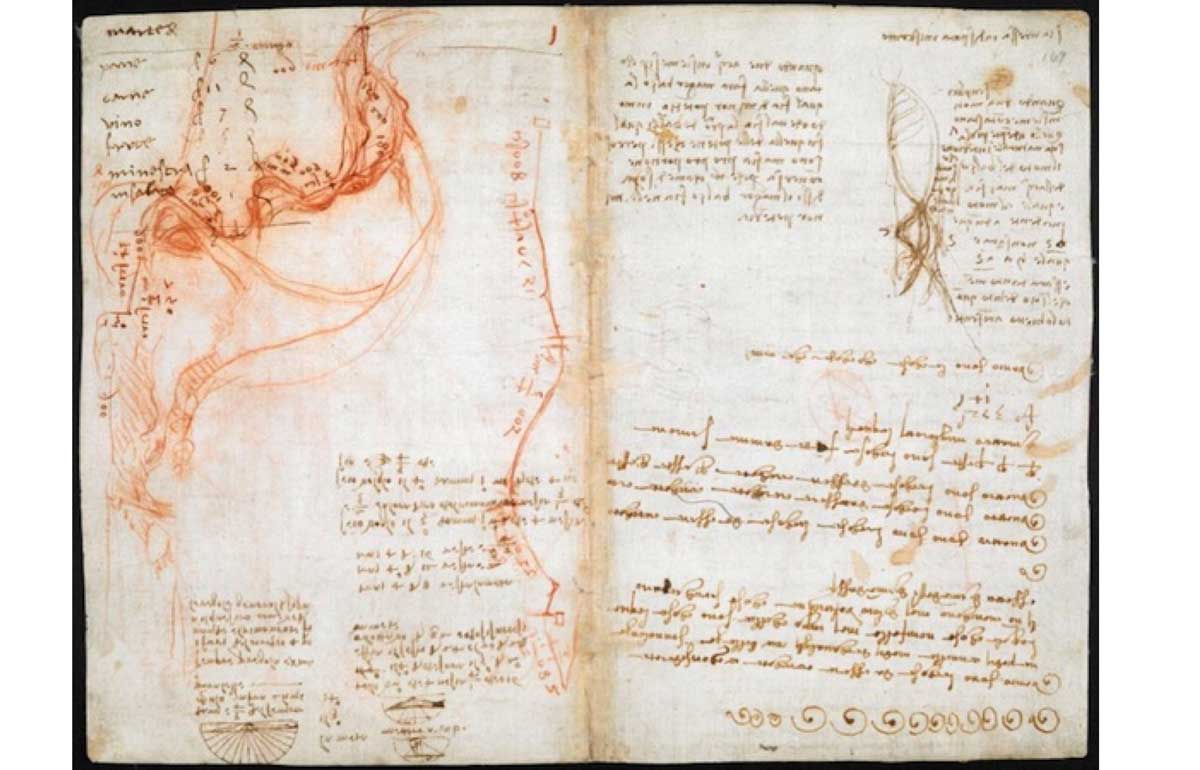
No introduction is needed for Leonardo Da Vinci. His notebooks burst with sketches, notes and ideas that defy the boundaries of his time. Imagine Da Vinci hunched over the sketches of his flying machines, his study of nature, or of the human body’s geometry. His notes and day dreams are a true treasure for mankind.
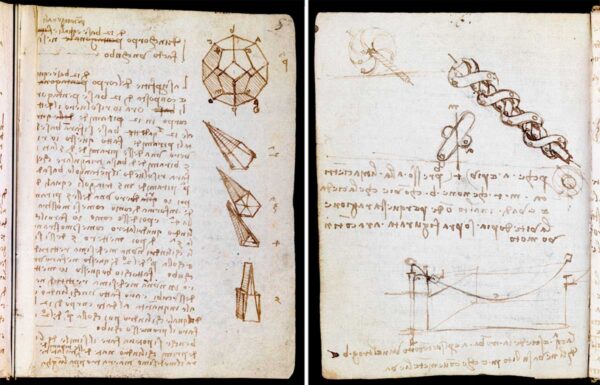
Leonardo da Vinci’s Notebooks
Thomas Edison
There would be no light without Thomas Edison’s research. We often imagine inventors as eccentric figures, lost in workshops cluttered with machinery and strange objects, their desks buried under piles of meaningless papers and notes. But don’t be deceived—within this seemingly chaotic environment are highly organized minds. They meticulously document failed experiments, small victories, and the road to groundbreaking inventions. Planning allows us to learn from setbacks and unlock our true potential.

Inventor Thomas Edison in West Orange chemistry lab
To the World of Art and Fashion
Coco Chanel
Another artist is the immensely talented Coco Chanel, a keen observer of society. A meticulous planner, she focused not only on growing her business but on revolutionizing the fashion industry. Picture Chanel in her atelier, pencil in her hand, sketching out her vision. Her process was more than just creativity—it was precision. Chanel’s planning wasn’t limited to designing clothes, it was about crafting a world where women felt empowered, comfortable, and ready to take on new roles in French society and, eventually, the world.
And I can’t help but think—isn’t that what planning is, the creation of worlds, one step at a time?
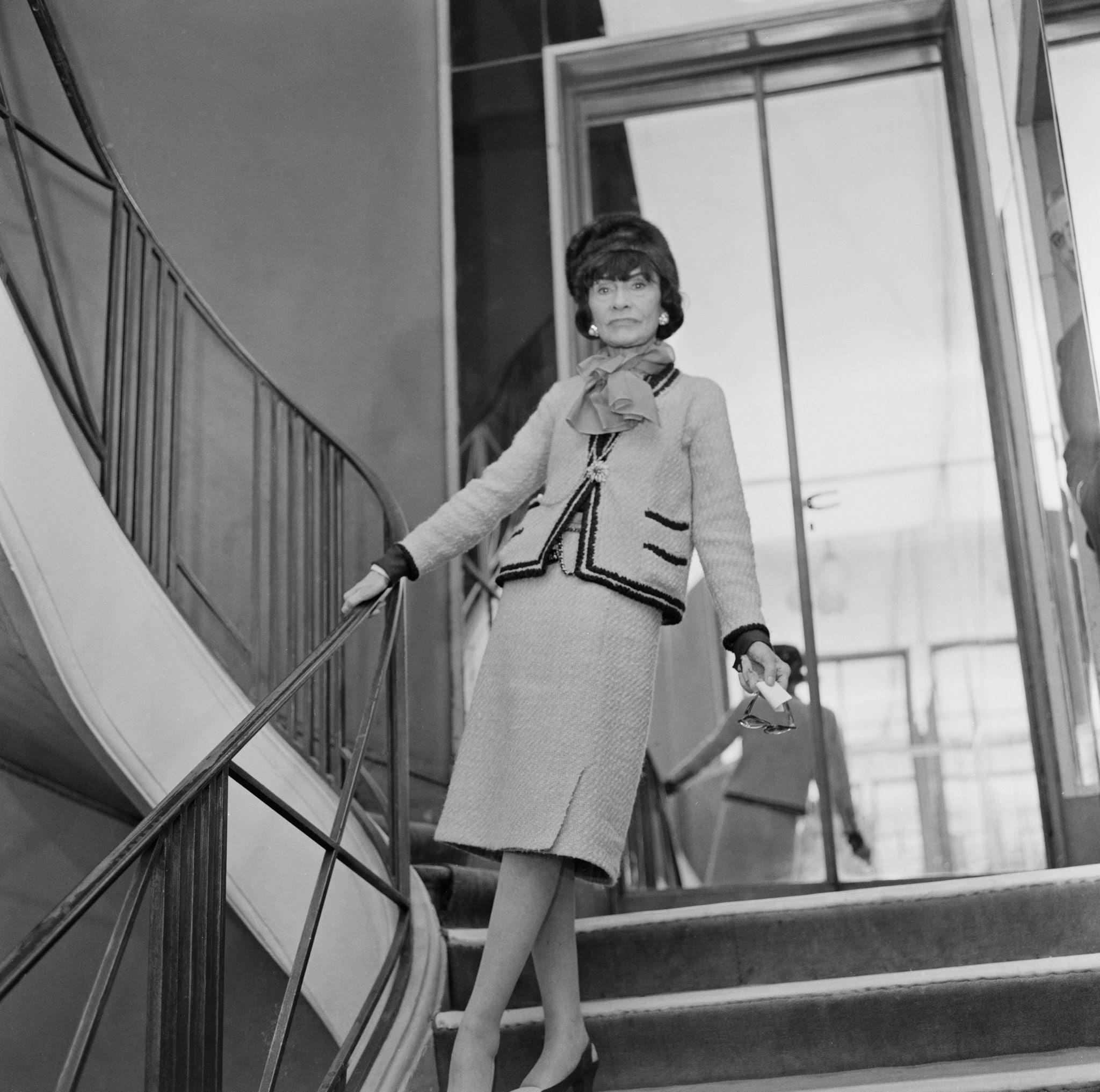
Coco Chanel in Paris, France, 1963, Photo Taken by Michael Hardy
David Bowie
I think David Bowie, who seemed to leap from one persona to the next with effortless grace, was anything but unstructured. In the pages of his notebooks, he charted the trajectories of his characters. Ziggy Stardust was a well-documented vision. I picture Bowie’s handwriting, messy but deliberate, laying out lyrics and stage concepts. It makes me wonder, how often do we mistake brilliance for spontaneity?
Planning, for Bowie, was a canvas, a space to explore his transformations before unveiling them to the world. His artistry shows us that reinvention is not accidental but a deliberate, planned process.
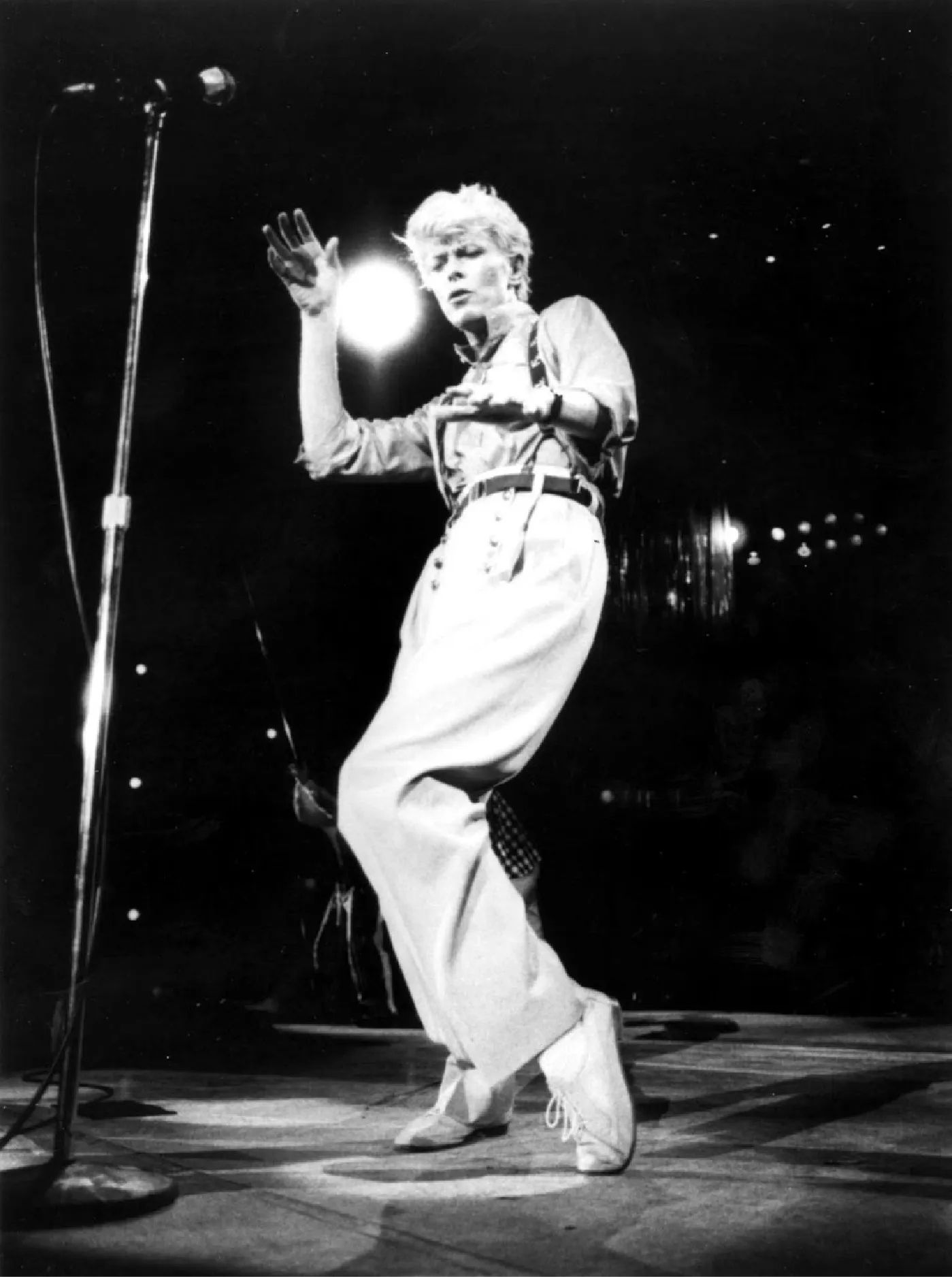
David Bowie in 1983
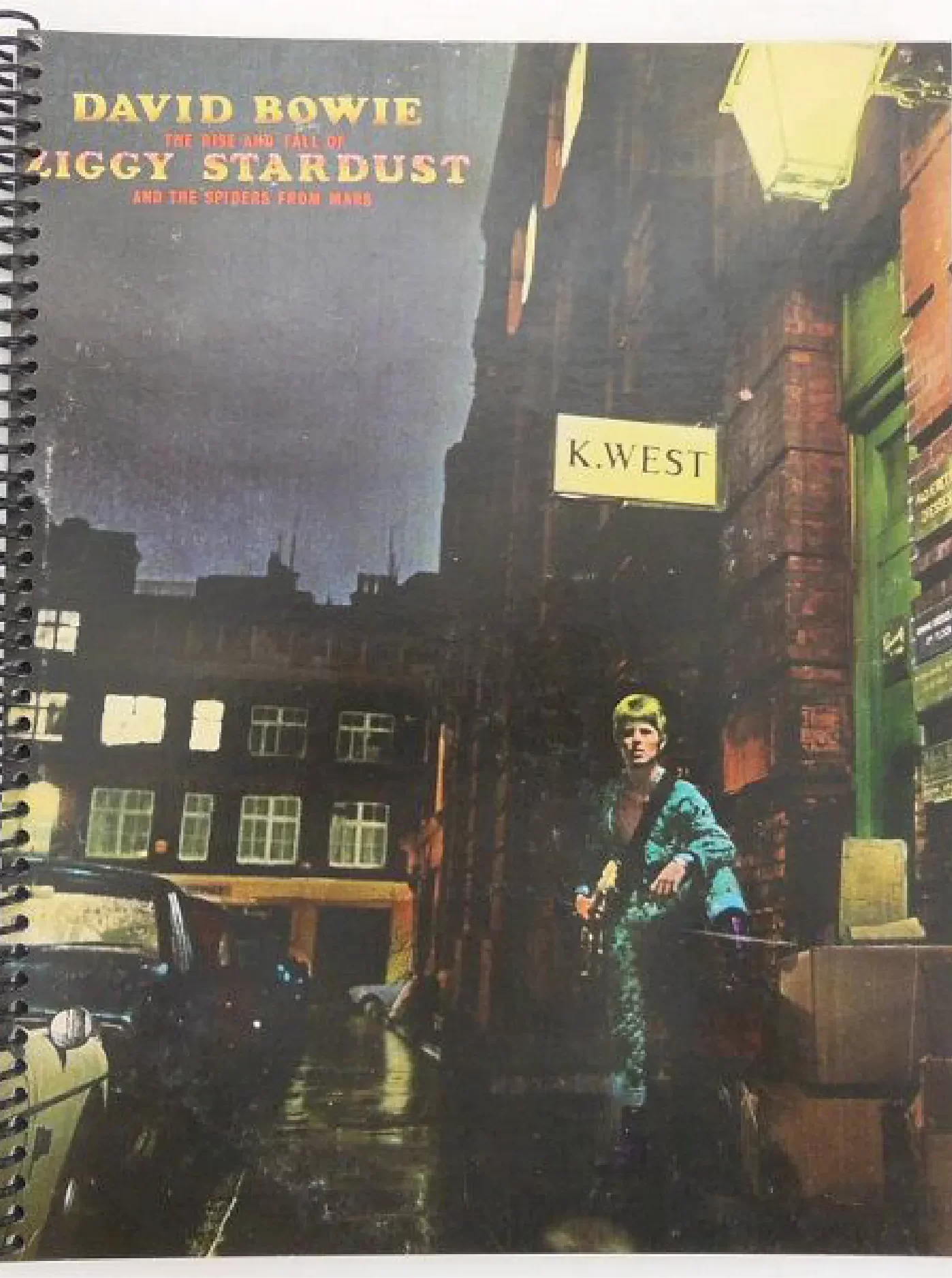
David Bowie’s Ziggy Stardust Notebook
Each of these figures’ methods differ, their mediums vary, but their shared dedication to planning is undeniable. And in their stories, we find echoes of our own at Zenobie.
Zenobie, dedicated to planning your future since 2020
Zenobie began in 2015, like many projects, on a small worktable with simple watercolor designs and the ambition to grow and expand. Since 2020, we’ve been empowering our community with the tools to craft and plan their futures, offering thoughtfully designed layouts and planning methods, that we have been using ourselves to get our dreams closer to reality. Our aim is to instill a habit and a love for revisiting your planners, tracking your progress, and celebrating milestones.
Our latest design, Cornucopia, calls for abundance in 2025. At the heart of it all, we offer you an invitation to embrace planning as a way of life.
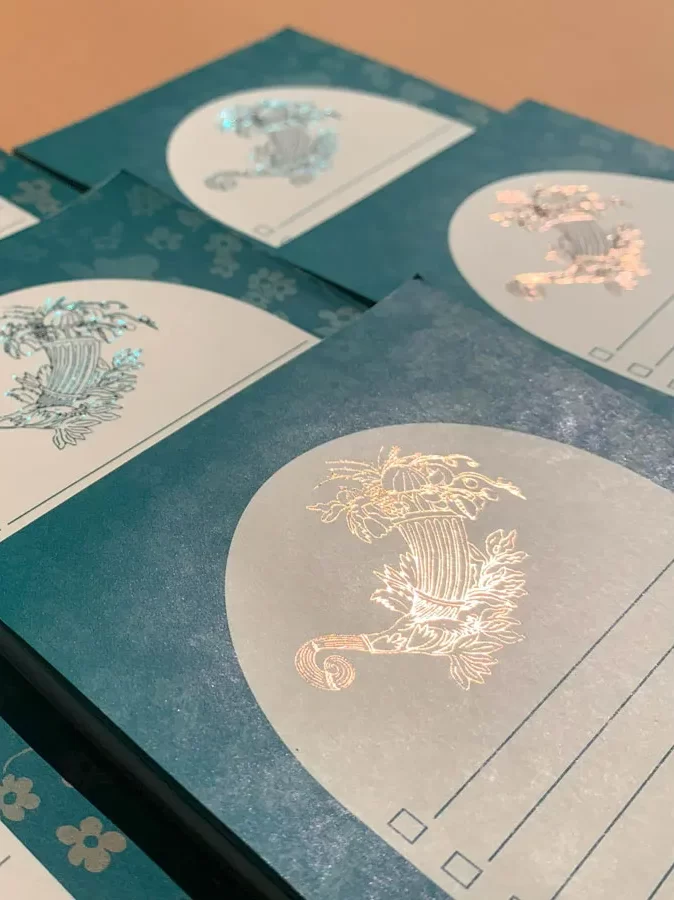
Cornucopia Checklist
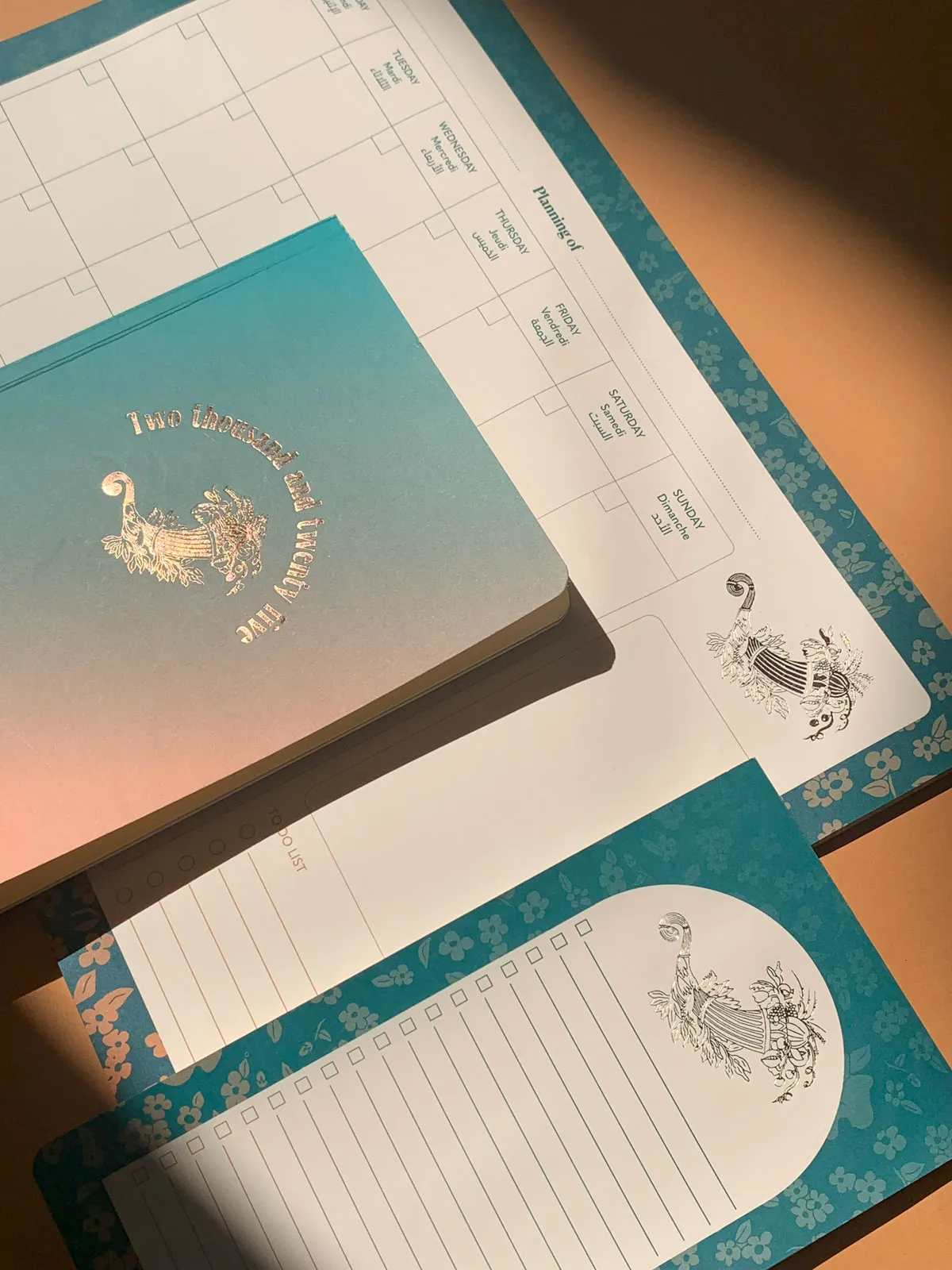
Cornucopia Stationery
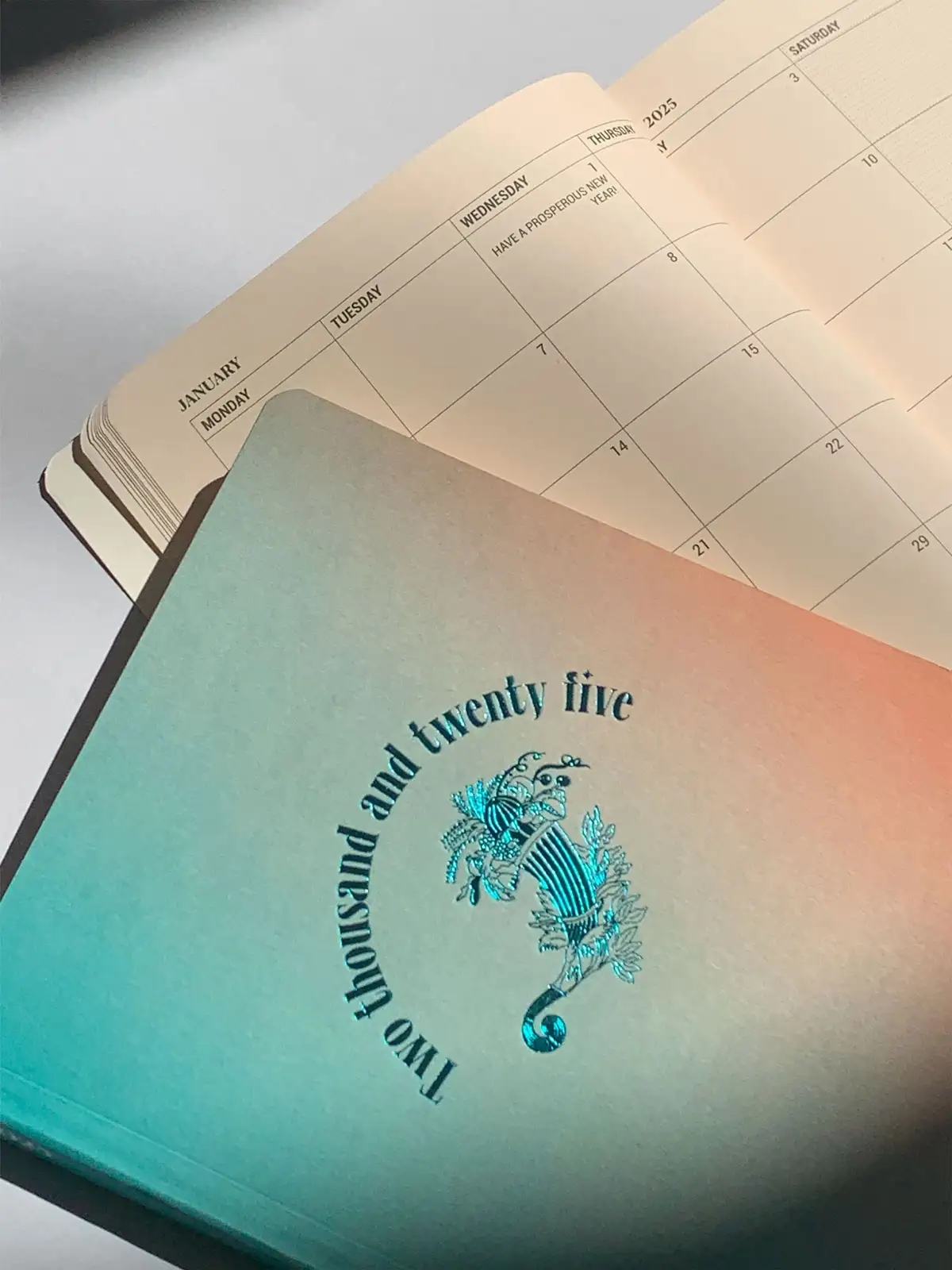
Cornucopia Diary 2025
Peace bringing back Prosperity, Élisabeth Vigée Le Brun, 1780
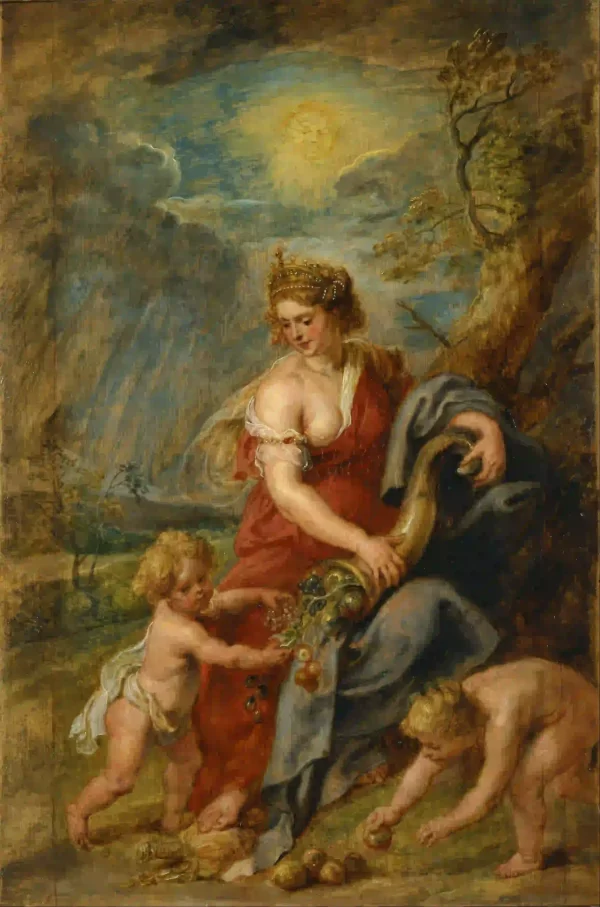
Allegorical depiction of the Roman goddess Abundantia with a cornucopia, by Rubens (ca. 1630)
A depiction of a woman looking sideways, crowned with wheat branches and holding a horn overflowing with coins, engraved on small rectangular gold bars. This was a gift given to me on a special occasion by relatives, and as a child, I was mesmerized by the image. Who was this woman? What was the significance of the beautiful horn she held? Why was this scene engraved on a gold plate?
It was a curious gift for a child—something I couldn’t play with, eat, or use. I could only look at it, admire it, and try to decipher the intriguing symbolism it held.
Years later, the mystery was solved through my reading of Ovid. In his version of the myth, Zeus’ mother, Rhea, entrusted her son to the care of a nymph to protect him from the jealousy of Cronos. Amalthea, a sacred goat, fed the young god milk from one of her broken horns, which she filled with herbs and fruits. This magical nourishment made Zeus immortal. And so, the myth of the horn of abundance, or Cornucopia in Latin, was born. Cornucopia became the emblem of many deities, particularly those connected with harvest, prosperity, and spiritual wealth.
I rushed back to my jewelry box, filled with the victorious thrill of solving one of the mysteries of my childhood. The woman engraved on the small gold plate in my hand was Amalthea, holding the horn of plenty.
This piece of gold became a kind of treasure, stamped with divine symbolism, meant to offer comfort in hard times. The Horn of Plenty – Cornucopia in Latin (Cornu: horn, Copia: abundance) – overflows with food and flowers, symbolizing prosperity and abundance for whoever possesses it.
The imagery of the Horn of Plenty was pervasive in classical antiquity, appearing on tapestries, everyday objects, and as a recurring theme for artists and painters of that time.
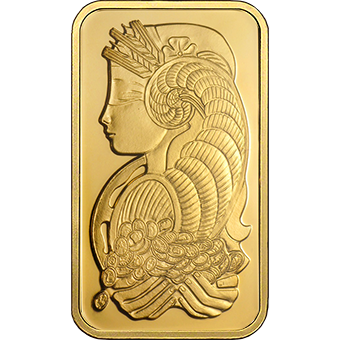
Gold bar stamped with Cornucopia
Cornucopia Collection 2024-2025 at Zenobie
As autumn approaches and the seasons shift, we’re excited to launch our new collection of stationery and lifestyle products, inspired by the imagery of Cornucopia. We’ve reinterpreted these timeless symbols in our own way and scattered them into our diverse range of products.
Our designs, foiled in metallic gold, yellow, rose, and electric blue, embellishes everything from checklists and notebooks to wrapping paper, T-shirts, and our signature 2025 diary. Soon, they will extend to crockery and homeware as well.
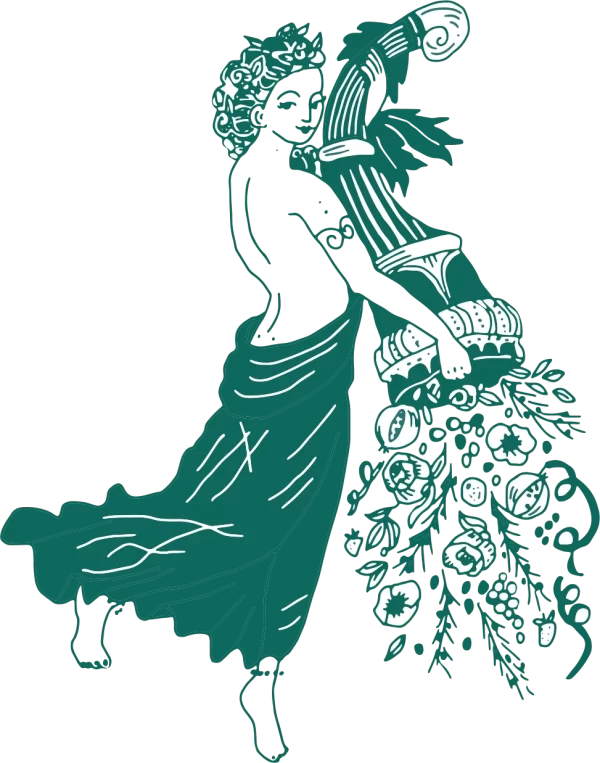
Cornucopia, Zenobie, 2024
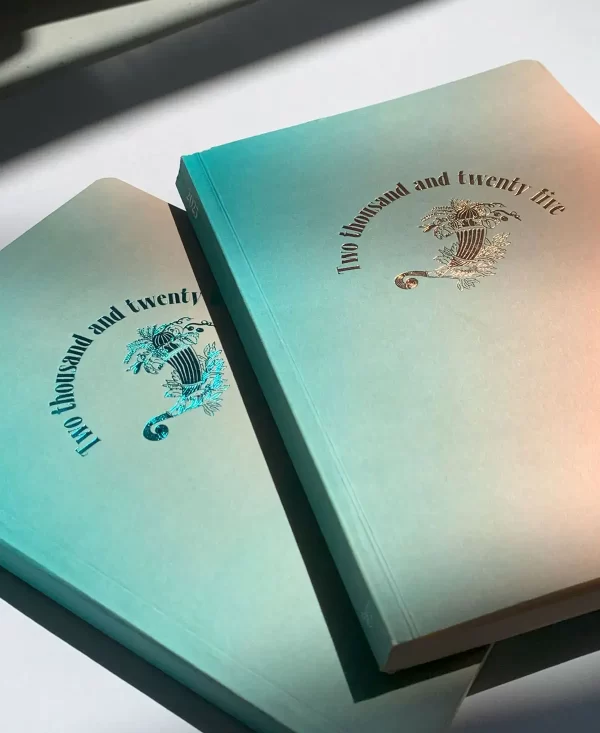
Cornucopia Diary 2025, Zenobie
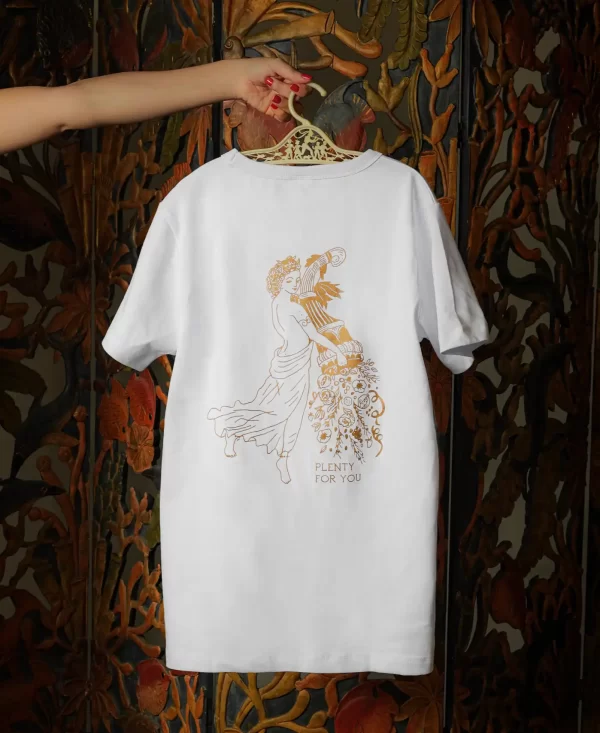
Cornucopia Printed White T-shirt, Zenobie
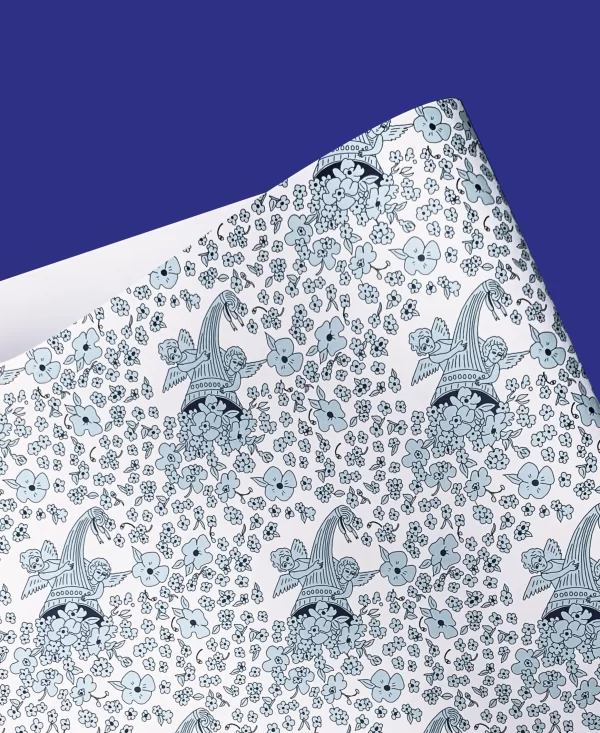
Cornucopia Wrapping Paper, Zenobie
At the end of the day, we’re offering you the gift of holding a golden Cornucopia in your hands too, wishing that the age-old prophecy comes true: that whoever holds a Cornucopia is blessed with abundance, both material and spiritual—the most opulent gifts life has to offer.
This dépêche is written by Zeina from Zenobie
Gustave Doré, 1847
How the Hydra and Bang illustrations depict our generation
Fall 2019 is a date our generation will never forget. Around 11 PM on October 9, young men took over Beirut downtown in violent protest against a new tax imposed by our government. This moment marked Lebanon’s irreversible plunge into the abyss of financial collapse, as we navigated from one catastrophe to another, including a massive port explosion that left us devastated and apathetic
This dire situation strongly reminded me of Jorge Luis Borges’ poignant illustration “Die Hydra der Diktator,” drawn in 1946. The illustration depicts a hydra showcasing the heads of vicious dictators of his time.“The Dictator’s Hydra” appears in the manuscript of Borges’ essay “Our Poor Individualism” (1946), which is also of great interest. The essay, part of the Jorge Luis Borges Collection at the Alderman Library of the University of Virginia, offers an Argentine perspective on the political landscape at the end of WWII. From left to right, the hydra features Miguel Primo de Rivera, Karl Marx, Juan Perón, Juan Manuel de Rosas, Eva Perón, Adolf Hitler, and Benito Mussolini. These military, political, and ideological tyrants form a menacing monster that overwhelms the Argentine individualism outlined in the essay.
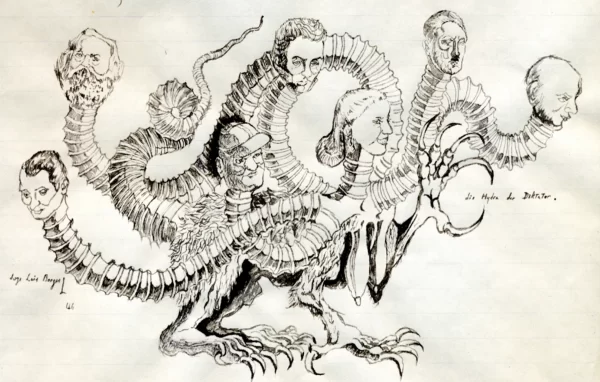
Jorge Luis Borges, “Die Hydra der Diktator” (1946)
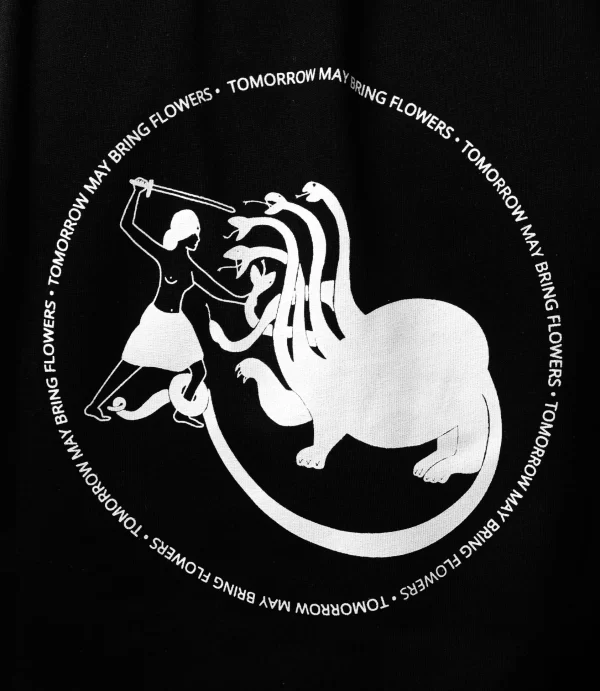
ZENOBIE, Hydra Black T-shirt
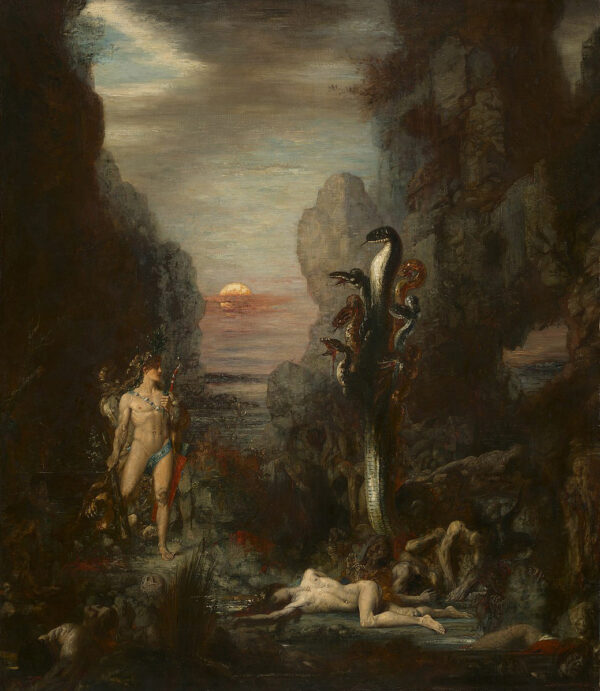
Hercules and the Lernaean Hydra – Gustave Moreau, 1826-1898
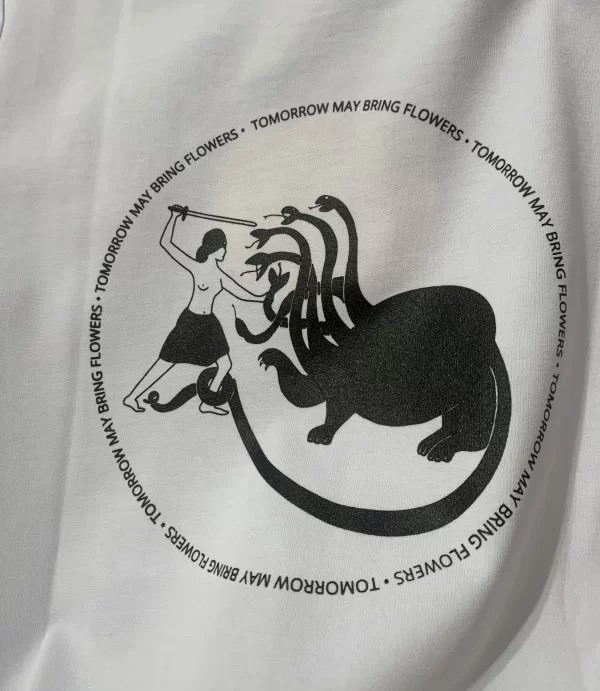
ZENOBIE, Hydra White T-shirt
The hydra, a famous monster from Greek mythology, was one of Hercules’ twelve labors. Each time one of its heads was cut off, it grew two more. Hercules finally vanquished it by striking its heart, a metaphor for addressing problems at their core.
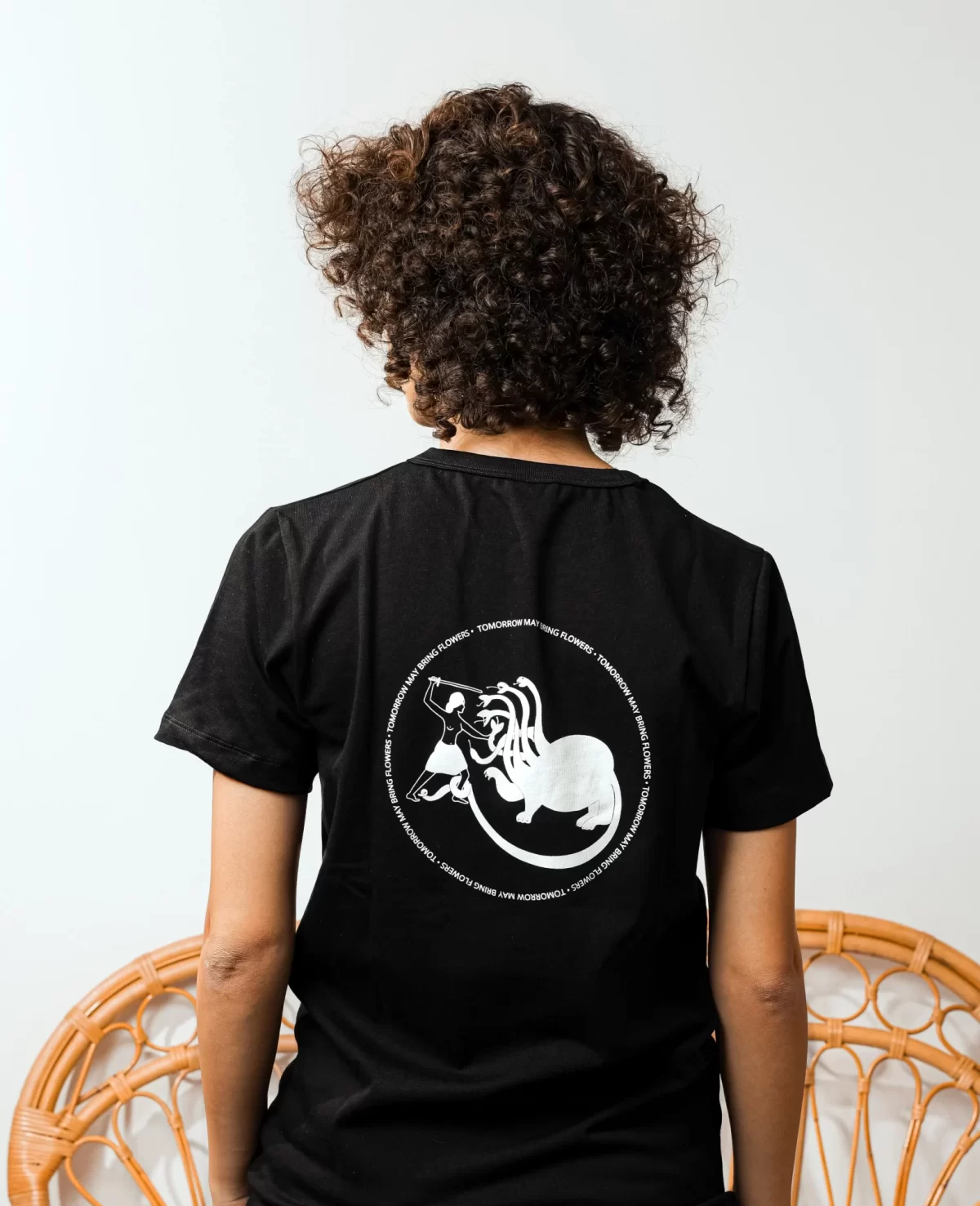
ZENOBIE, Hydra Black T-shirt
The analogy between Borges’ political monster and the hero who defeats it resonates deeply with our situation. We felt entangled by a political elite that drove us to collapse, yet hopeful that by standing up against injustice, we could be the heroes of our time.In 2024, we see the world being shaken by young people protesting around the world, against issues and horrors generated by their ruling classes.
This image of the hero slaying the hydra symbolizes our generation’s quest for change and the establishment of a new world order where peace, justice, and kindness prevail.
Another prominent theme resonated in the streets of Beirut, calling the popular movement a woman’s revolution. It claimed that we are finally seeing Lebanese women speak up and be present after being absent for the longest time.

Photo by Myriam Boulos, Beirut 2019
I personally found this statement incoherent, as Lebanese women are among the most resilient and hardworking individuals. They have always played vital roles in their communities and have been at the heart of many thriving businesses both in Lebanon and internationally. Lebanese women have consistently been at the forefront of numerous movements, fighting for their rights and presence in a strong patriarchal society, proving their impact across various areas of social life.
Women have continually challenged the core of the system, driving improvements in the economy and the social world.
This is where the BANG T-shirt came to life. The design depicts a young woman putting a bullet through these outdated beliefs, making noise, and standing up for herself. In honor of all the women who have built a strong feminist movement and provided today’s young girls with a compass of possibilities and choices, through laws and amendments introduced in their favor, our women have carried on their backs grief, love, womanhood, acceptance, openness, and courage. They lead from the shadows, working to ease pain and suffering, and shedding light on the future.
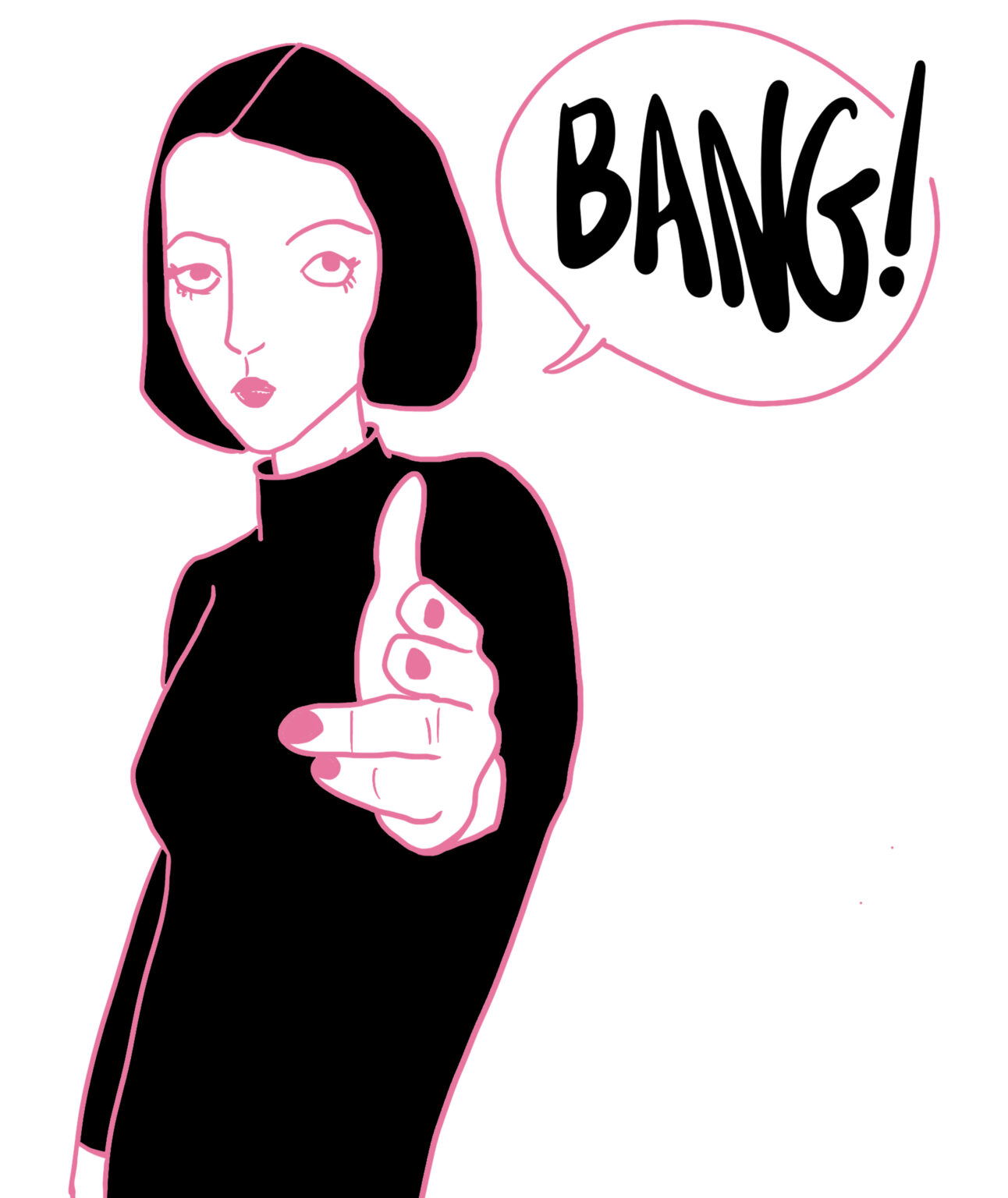
ZENOBIE, Bang, 2019
We envision our Bang and Hydra emblems worn by young heroes, men and women, creating legions of committed individuals pushing against the tides, with the hope that tomorrow might bring flowers.
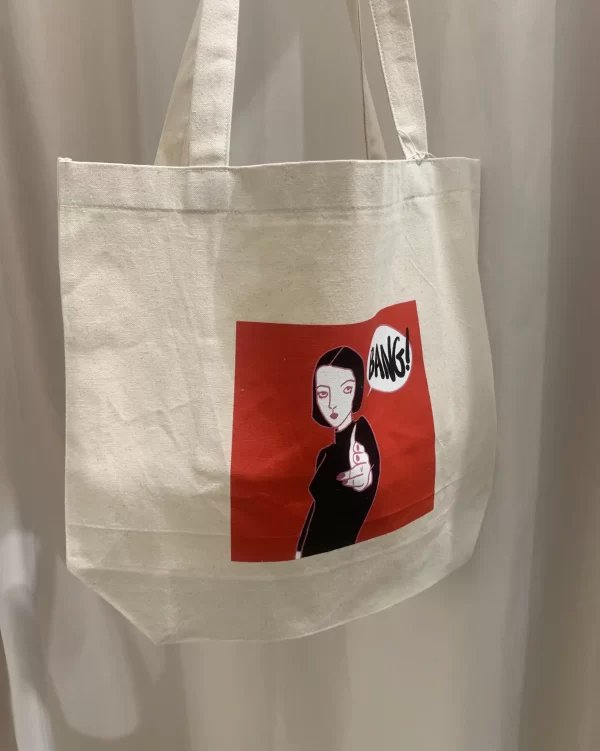
ZENOBIE, Bang Tote Bag
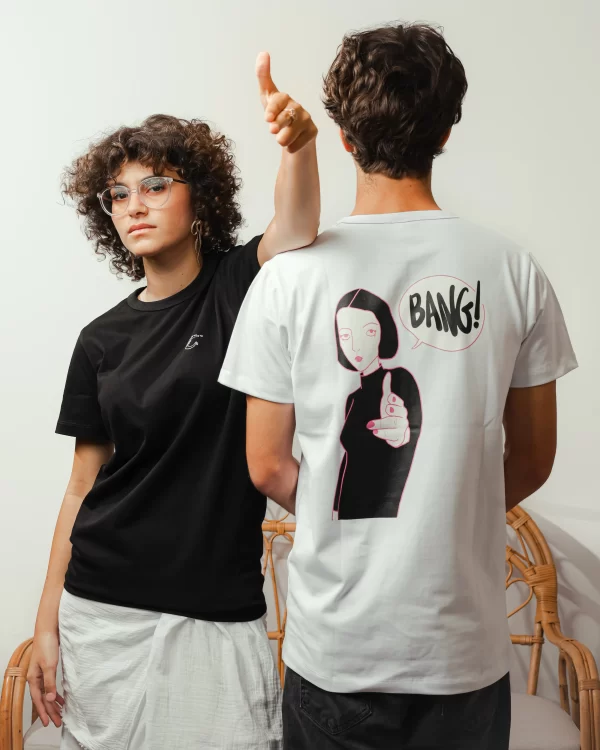
ZENOBIE, Bang Black and White T-shirts
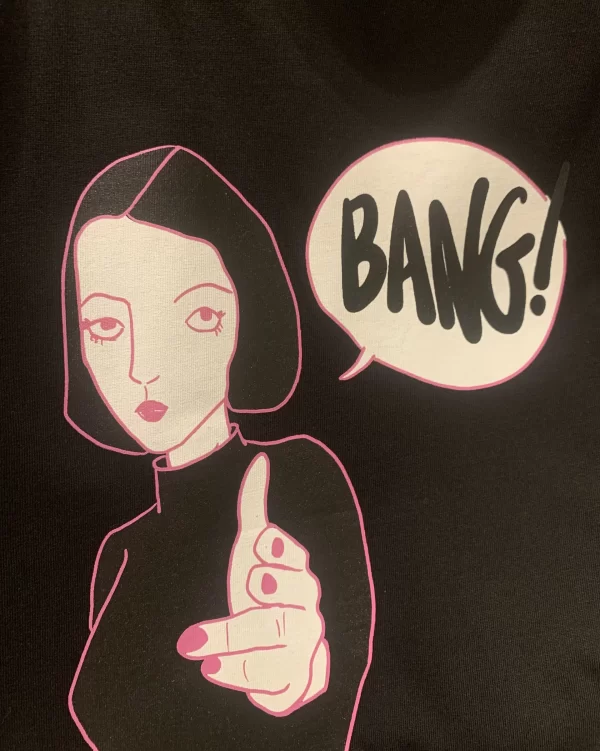
ZENOBIE, Bang Black T-shirt
This dépêche is written by Zeina from Zenobie
A gathering at Wael and Rabih
Tribute to a Sanctuary
Crafting a home is one of the most meaningful and demanding things we do. It takes years of careful thought and dedication to assemble furniture, dishes, pictures, rugs, cushions, and more, forming a unique place we call home. This demanding process requires us to find objects that not only serve a practical purpose but also reflect our identity. In this personal journey of homemaking, we’re not just putting together physical elements; we’re building a haven that resonates with our identity. Our home becomes more than a collection of items; it transforms into a repository of memories that shape the narrative of our lives, providing a space where we return to ourselves.
To help express the warmth of home, we asked three artists we know to share their thoughts about what home means to them. We hope they will touch your hearts like they touched ours.
HOME – Salim Mrad (for Zenobie)
As I sit down and ask my angel to guide me towards words of truth regarding the meaning of home, two songs come to my memory. First, a beloved tune from another era of my life: “My home is where you are, in every beat, in every beat we’re closer…”, sings Johnny McDaid on Paul Van Dyk’s 90’s trance hit. I am touched by this idea of a home that is moving, one that is ever-expanding like the ever-expanding universe we live in (and are part of). I am touched by the idea of a constant state of both anticipation for the blissful encounter and gratitude for the reunion that is already always happening. It’s an endless dance. Whenever we step out on a balcony and look at the stars, do we remember that we are not in some fixed spectator’s position looking at celestial objects moving in the skies, but rather moving passengers on a spinning home twirling in the great unknown?
No home can be fixed or permanent because our human condition is a mesmerizing condition of a Ferris wheel passenger (or a roller coaster’s). What an ecstatic adventure indeed! What else could it be? The second song that comes to mind is one I directed a music video for eleven years ago (yes, eleven…): “Home” by Lebanese band Sandmoon. On this track, Sandra Arslanian sings: “Didn’t find my rest in those desert streets, didn’t find a place where I could feel free”. Therefore, finding one’s home can also be a lifelong quest. Every time we reach a mountain plateau and rest a bit to enjoy the view, there comes a new calling to some higher ground, to another side of the mountain. Settling somewhere once and for all can sometimes be the thing we need to do the less.
My experience with my childhood house is one particular story. I’ve been returning to the same geographic spot for a while. My family and I left it first in 2013, then I came back to it (within a new apartment, meters above the former) in June 2020, just to be evicted from it again a few weeks later because of the port blast. Ten months later, I was back, but I did not have the same vision this time. I was not the same person anymore. My house was not just my own private sanctuary, but a place for encounters and growth. Is it my home still? Maybe, for the moment.
My home is where You are.
In every beat, we’re closer.
Salim Mrad
Lebanese Filmmaker and Author
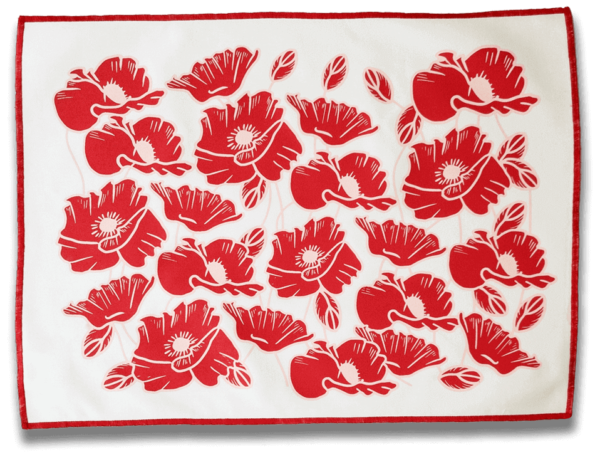
Salim’s favorite Zenobie Homeware product is the Poppy Placemat.
دار – Nadine Touma (for Zenobie)
The word Dar دار has echoed so deeply and profoundly in the current war on Gaza. Dar is an Arabic word that we chose to include in our name Dar Onboz and Ahl elDar. Dar means the land the home the circle the inside or the Center that links everything together in a traditional Mashriqi Levantine home. It’s both a masculine and a feminine noun ; in Arabic everything has a gender the sun is a she, the moon is a he and the Dar is a she-he. In every appearance of any Palestinian child adult or elderly you hear the word Darna our home , Diritna our Neighborhood, Dyarna our collective homes and AlDar for the homeland. That Aأ in the Center of that word the Aأ that is pronounced like an Ah ! An Aأ that reaches upward with our lips pronunciation like our Alef أ the first letter of our alphabet. Aأ screams pain and joy, love and hate , anger and serenity, past and present, endings and beginnings, earth and sky. Home is that Aأ which has encompassed the primordial scream of birth the first sound we make to the last breath we take. Home is where that Aأ has no beginning no end and yet it’s where the sky meets our roots.
I have carried it with me everywhere I go and planted it in everything I do and tell it in every tale I tell and pass it on to everyone I meet and safeguard it in everything I weave.
I will end with our beautiful wishes bestowed to us by our ancestors Darna Darkom our home is your home but only if , if you deserve it because this hospitality and generosity is no longer unconditional, our Dar with all its knowledge is scared and can only be offered to those who will honour it and protect it, keepers who vow to share its beauty and wisdom.
Nadine Rachid Laure Touma
Co founder of Dar Onboz and Ahl elDar
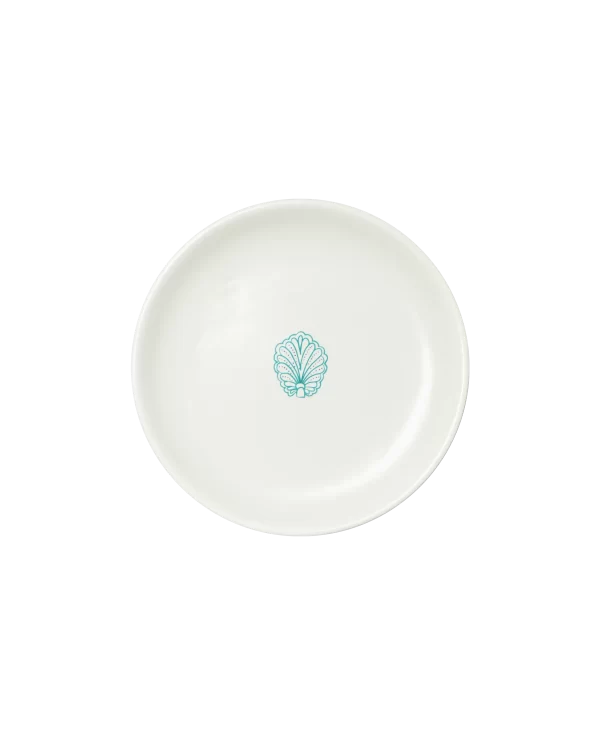
Nadine’s favorite Zenobie Homeware item is the Small Shell Ceramic Plate.
HOME – Noémie Naoum (for Zenobie)
HOME – Noémie Naoum (for Zenobie)
I always thought home was a distinctive place. At first, I believed home was my parent’s house in the mountains. It was our fifth but this is the only one I still call home.
With time and distance, home became a homeland.
With more time and connections, I started going from a home to another. To feel home in my city of adoption, it started with friends who became family, a space feeling tiny and suffocating becoming warm and cozy, objects gathered from everywhere, collected at different moments reminding me of moments, people, a side of me I still am or lost on the way. Home is where I spend as much time in the kitchen as on my desk. Home can be any place with a chosen family and a capacity of rooting, so I can be nourished and live.
Noémie Naoum
Artist and Author
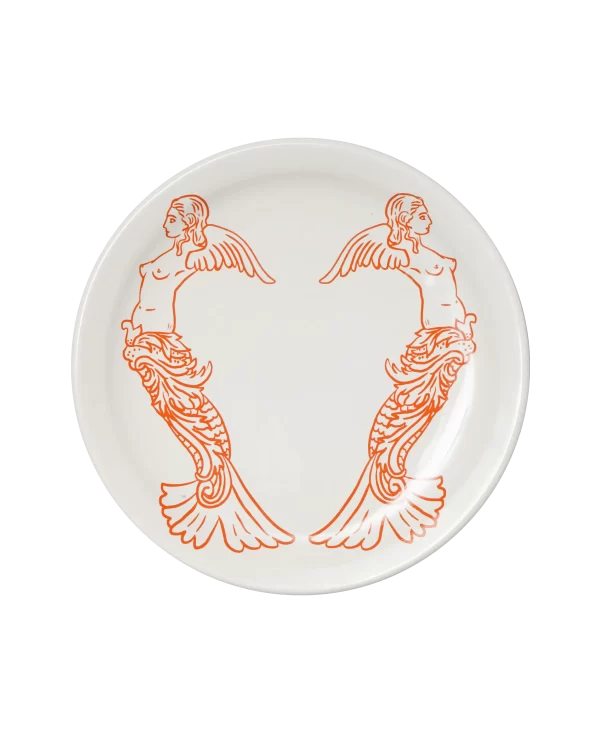
Noémie’s favorite Zenobie Homeware item is the Mermaid Ceramic Plate.
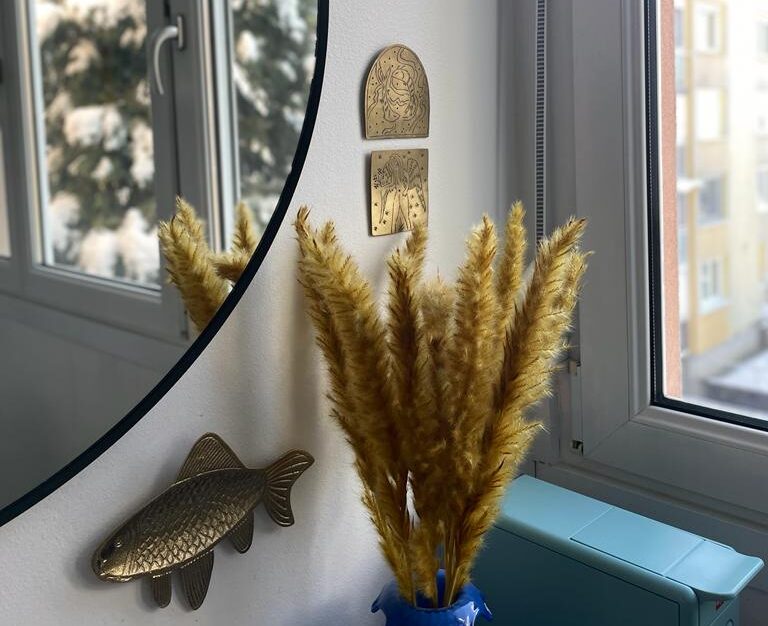
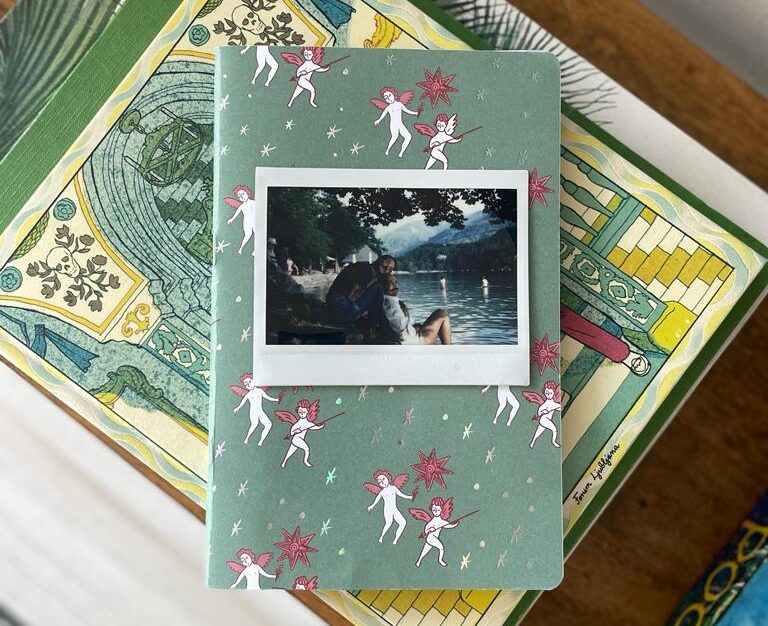
Thanks to Waël and Rabih who shared pictures of their beautiful home.
A journey through a childhood obsession.
I’ve been delving into stories that are deeply rooted in our collective memory. These are the very first narratives I encountered as a child, and they possess a profound symbolic and imaginative dimension that always piqued my young curiosity. While concepts like passion, love, revenge, and death were beyond my innocent mind at an early age, I could sense the richness that these stories held.
The myths I’ve explored are filled with symbolism, offering a treasure trove of inspiration for graphic representations. These tales seeped into my imagination, and translated into illustrations and patterns that will grace Zenobie’s end-of-year collection.
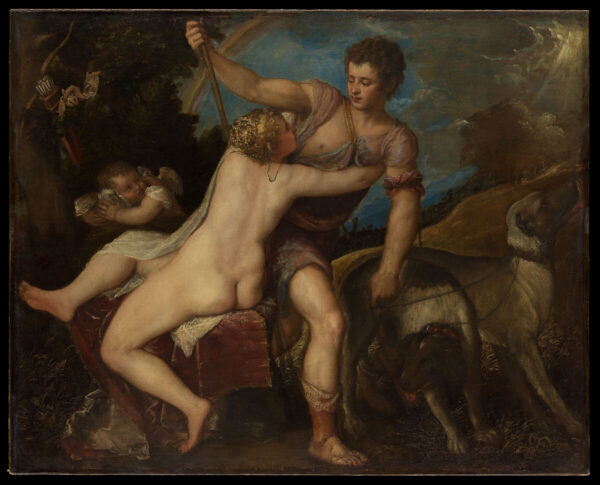
Adonis and Astarte by Titian
My journey begins with the timeless tale of Adonis and Astarte.
Adonis, a handsome mortal, captured the heart of the goddess Astarte, embodying love and renewal. His tragic death while hunting a boar plunged Astarte into grief, heralding winter. Yet his annual return from the underworld signaled spring, representing the cycle of life’s rejuvenation. Legend has it that the red poppy seeds symbolize Adonis’ blood, scattered upon the earth. This narrative elegantly interweaves themes of love, loss, and the rhythms of nature.
Another rendition tells of a jealous Aphrodite, drawn to our hero, who dispatches a ferocious boar to kill him and separate the lovers. Later, I’d discover that crimes driven by passion and love were a recurring motif in stories and real life, sometimes even justified by certain cultural norms.
My next stop is the captivating myth of The Abduction of Europe.
It recounts the tale of Europa, a Phoenician princess who caught the eye of Zeus. Enchanted by her beauty, the god transformed into a white bull. Europa, beguiled, caressed the gentle creature and even rode upon his back. Suddenly, the bull surged toward the sea, bearing her away to Crete. There, Zeus revealed his true form, and their fates intertwined. Heartbroken, Europa’s father sent her brother Cadmus in search of her. While Cadmus never found his sister, he introduced the alphabet to Greece. The very name “Europe” derives from the princess Europa.
In some versions, Europa was forced to ride the bull, and Zeus’s actions were far from consensual, offering a less romantic alternative to the story.
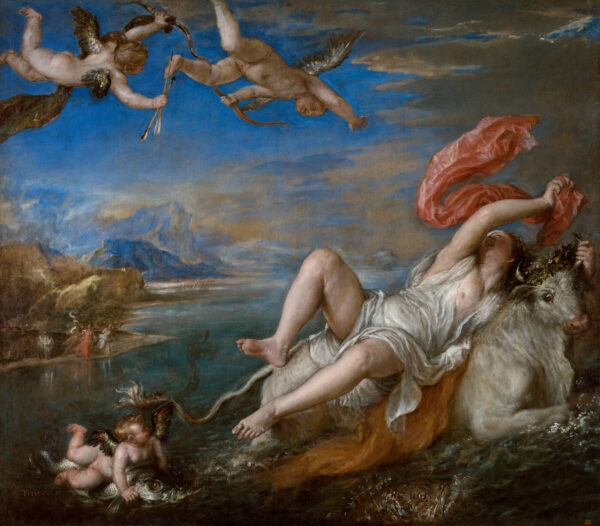
The Rape of Europa by Titian
As I grew, I learned that these myths serve as depictions of human emotions and characteristics. All these figures are, in fact, reflections of our untamed human nature. They speak of love, passion, temptation, violence, revenge, loss, grief, and their consequences. What’s truly captivating is how these narratives become woven into our collective identity, becoming a part of our history. The breathtaking red poppy fields one encounters when hiking in Lebanon during spring serve as a perpetual reminder of Adonis and his divine love affair.
Furthermore, the naming of the continent Europe after a Phoenician princess abducted from our Levantine shores adds an intriguing layer to our storytelling. Whichever version of these stories I choose to embrace, they all revolve around human desires and their repercussions—versions passed down through translation and transformation, carved, painted, and sung by countless artists from ancient civilizations to the present.
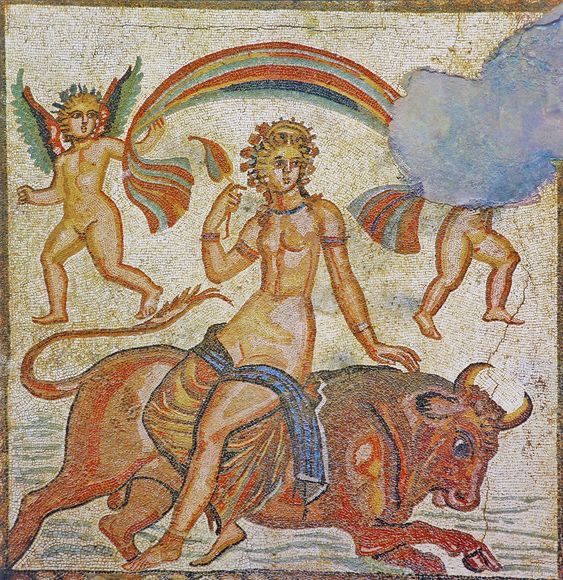
“The Rape of Europa” (2.06 x 2.00 meters) dated between the end of the 3rd century AD and the start of the 4th century AD, was discovered accidentally in 1872 on private property, and is now exhibited in Sparta Museum
At Zenobie, I aspire to be an heir to these tales and a perpetuator of myths throughout the products we create for our customers. I choose to believe that Adonis’ death was a mere hunting accident, and I feel blessed to witness the poppy-dotted fields every spring, reminding me of the union of Astarte and a mortal. Similarly, I’m amused by the notion of Europa’s surprise upon discovering that the bull she rode was, in fact, a splendid god, akin to the stories of princesses who kiss frogs to lift curses from charming princess.
Within the designs and drawings gracing Zenobie’s products, you’ll find a narrative steeped in love and desire. Our heroes are locked in a passionate embrace, surrounded by cupids and Astarte’s stars, where danger meets endless possibilities.
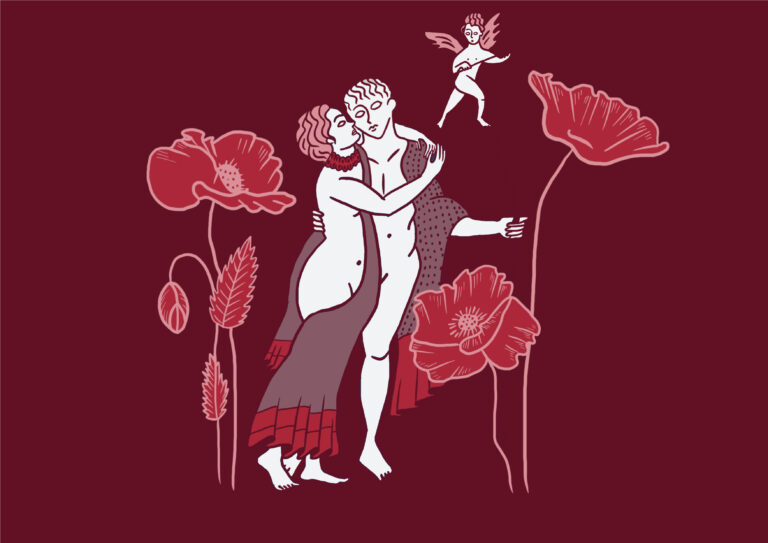
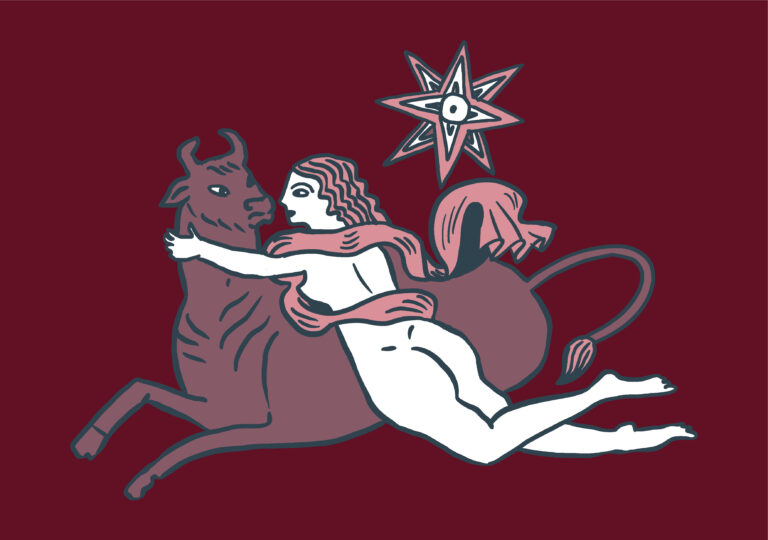
I hope you find as much joy in exploring these myths as I do. My passion for these stories, characters, heroes, and monsters has held my heart captive since a young age, and I hope they captivate your heart just as deeply. I’m thrilled that these myths will soon come to life on our upcoming Zenobie products, and I can’t wait to see them become a part of your daily life, serving as a reminder of the enchanting parallel world we journey through.
This depêche is written by Zeina from Zenobie.
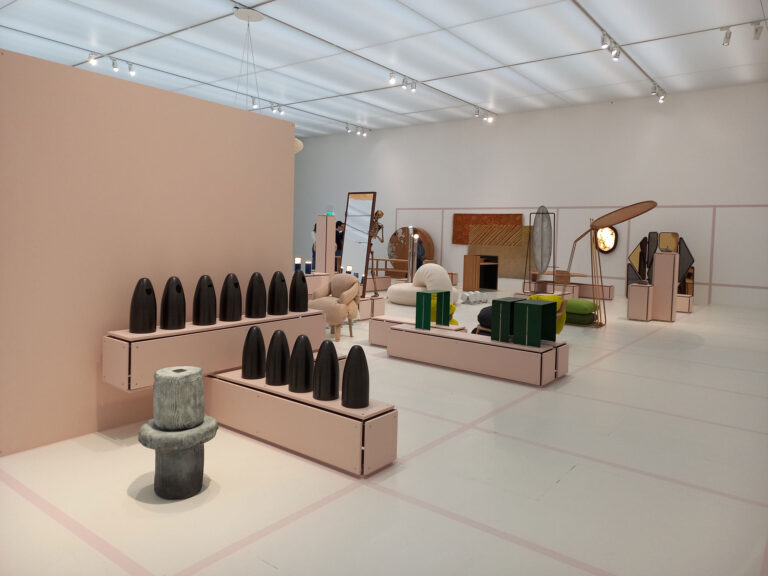
This year, the mudac, museum of Contemporary Design and Applied Arts in Lausanne showcased a captivating and all-encompassing exhibition celebrating Design in Lebanon, which toured several cities. Zenobie had the honor of being commissioned to create custom-designed notebooks for the exhibition’s gift shop, alongside some of our stationery products and the exquisite Osiris paper vases, a collaboration we did with Exil Collective.
Gregory Buchakjian, a dear friend, was part of this exciting project and had visited the exhibit multiple times. We met at the Sursock Museum Café, savoring a chocolat mou, and chatted about his journey with the mudac team and his impressions of the entire experience.
As the sun beat down on a hot July afternoon, I arrived early, relishing the grandeur of the Sursock Museum’s majestic court.
It was heartening to witness the museum back to its vibrant self after the trials and tribulations of the past couple of years.
Greg strolled in fifteen minutes later, unusually without his signature hat and Muji backpack. As we settled in, transitioning from our usual lively conversations, we dived right into the subject at hand: BEYROUTH, LES TEMPS DU DESIGN | BEIRUT, THE ERAS OF DESIGN.
Gregory Buchakjian is an art historian and artist living and working in Beirut. This conversation happened with Zeina Bassil from Zenobie.
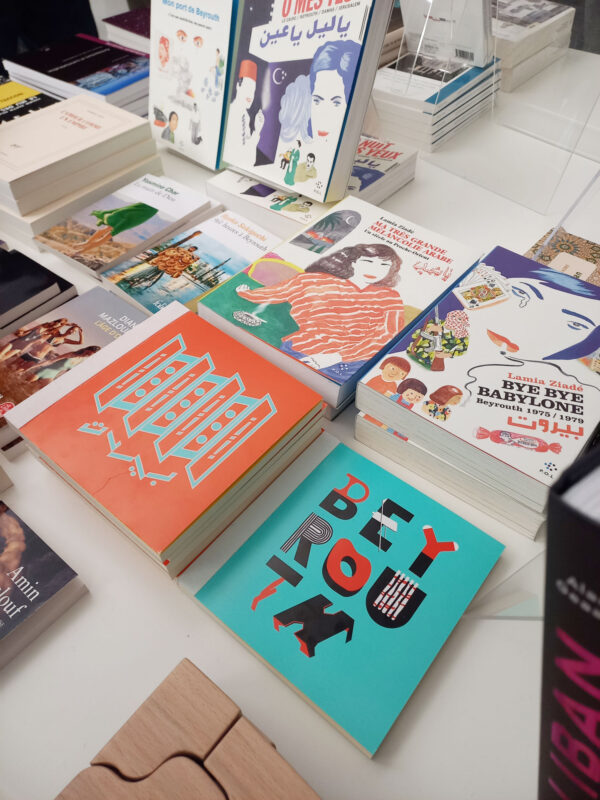
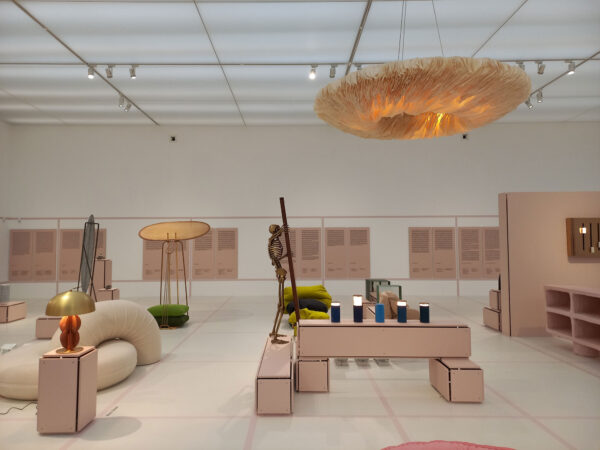
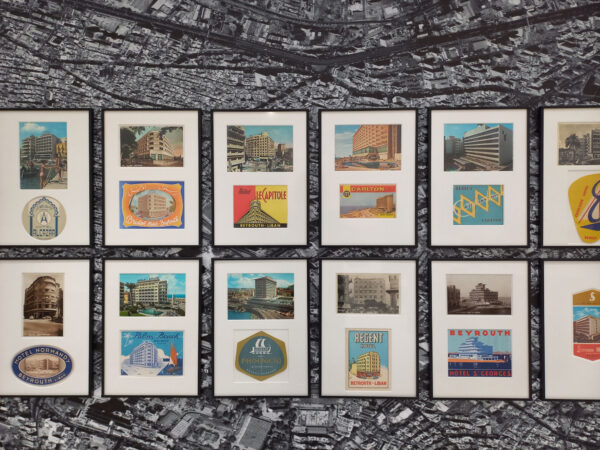
Z.B.- What is your input in the exhibition Beirut Les Temps du Design and how did you get to participate?
G.B. Marco Costantini, the Deputy Director of mudac, was inspired to curate the exhibition after connecting with Lebanese designers Karen Chekerdjian and Marc Dibeh and exploring the vibrant city of Beirut. Marc Dibeh introduced us and he visited my studio, which was the office of Fontana, a 1960’s department store known for its in-house designs and locally produced furniture.
The exhibition was initially focused on contemporary design, spotlighting designers who emerged in the 1990s and continued to shape the design scene until today, the likes of Karim Chaya, Karen Chekerdjian, and Marc Baroud were among the talented artists featured.
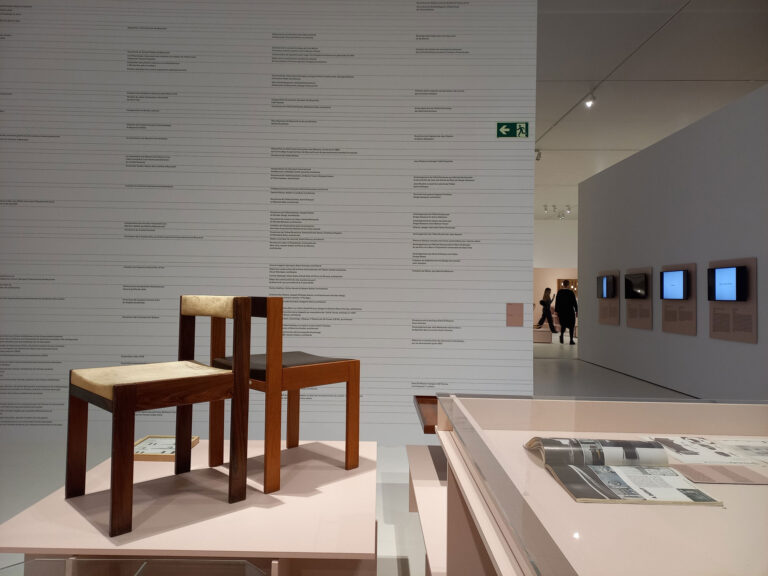
As the project evolved, Costantini decided to expand its scope by delving into Lebanon’s design history prior to the War. I was tasked with researching creators from this pre-war era when the term “designer” was not yet in common use. Instead, they were known as architects, interior architects, or entrepreneurs. Through Fontana’s archive, preserved by Jack Matossian, and the fascinating Khalil Khoury / Interdesign archive, we uncovered the stories of those who contributed to Lebanon’s creative heritage.
Both Fontana and Interdesign, played key roles in making furniture accessible to a broader audience, shaping the landscape of affordable furniture in Lebanon. For instance, my office when I was a kid was from Interdesign and is still in a perfect condition.
Beyond these two archives, I discovered other designers from the pre-war period, including the Piccaluga brothers, who not only had local stores and galleries but also made an impact on the international design scene.
In essence, the exhibition became a journey through time, celebrating the enduring legacy of Lebanese designers and their contributions to the world of design, a testament to the rich tapestry of creativity woven throughout the nation’s history.
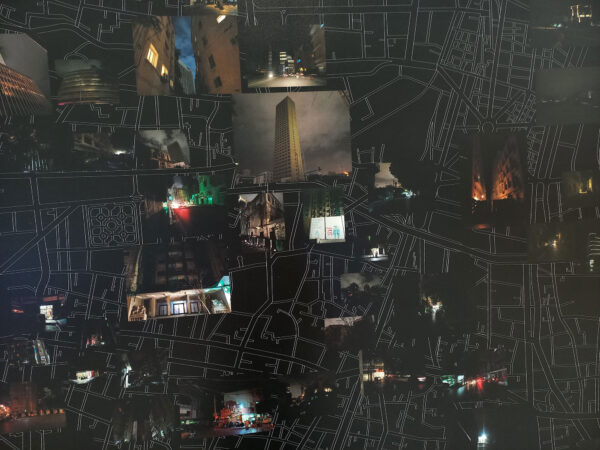
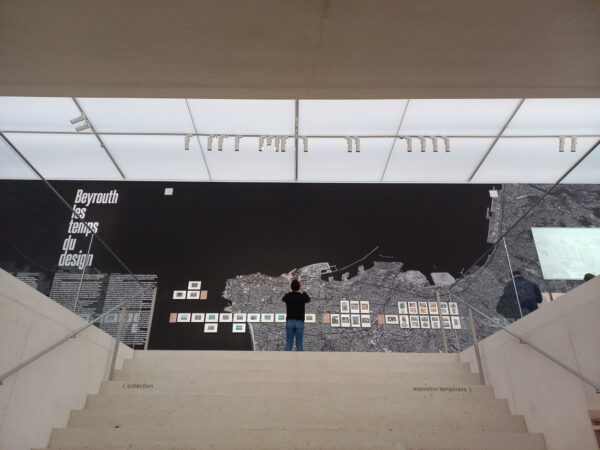
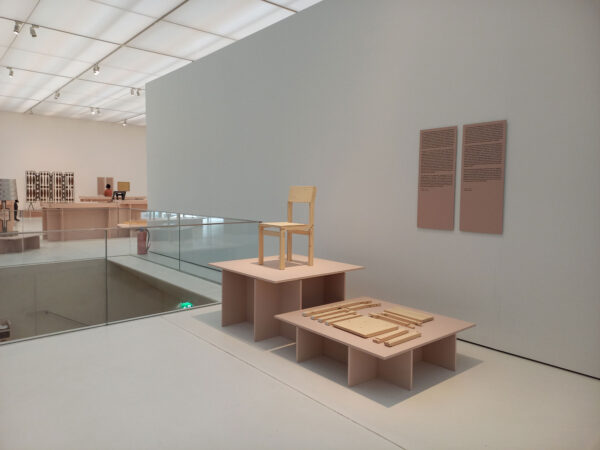
Z.B. If you had to pick three pieces, what would they be?
G.B. If I were to select three pieces for the exhibition, they would be as follows:
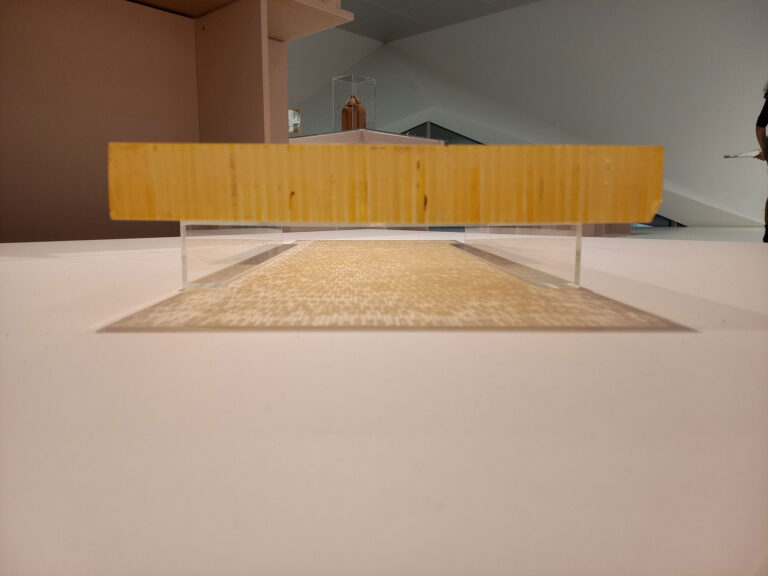
A console from my parents’ apartment, which has been an enduring part of my life since we share the same age. Crafted by Michel Harmouche, this console was originally fixed on the wall in my parents’ former home in Ras Beirut. However, when they moved, they left behind the metallic structure that once held it to the wall. As a result, it now exists as a fragment, and was filled with curiosity to witness how people will perceive and interact with this enigmatic piece that holds a wealth of memories and stories within its sleek design.
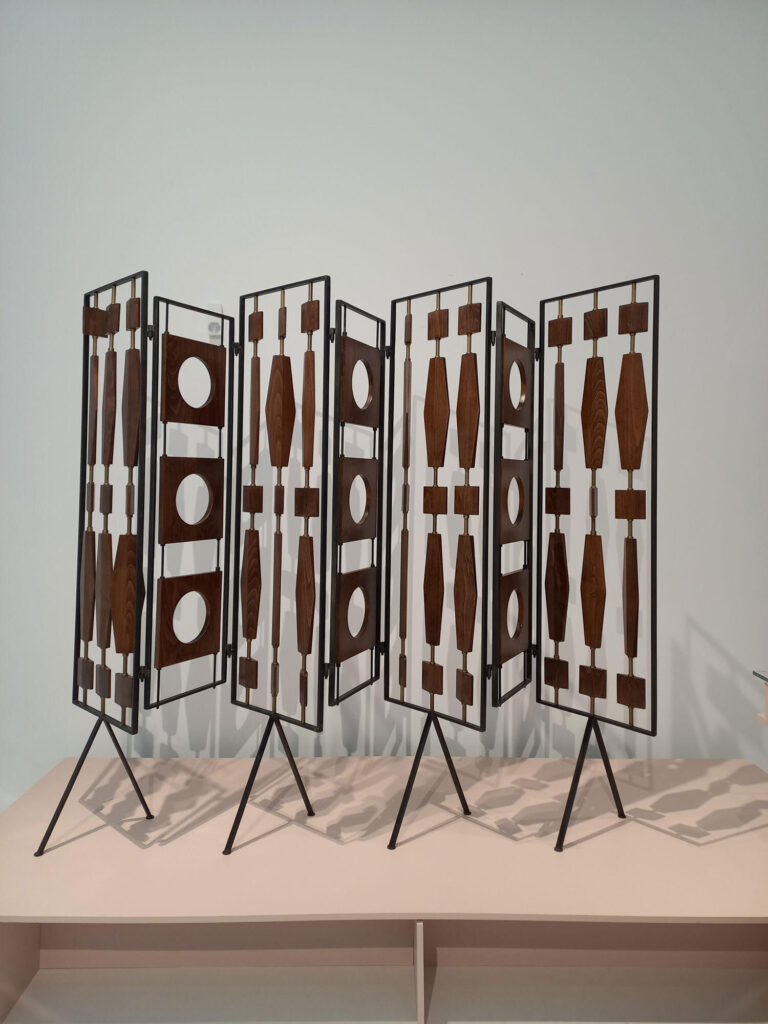
A resurrected screen, created by Serge Sassouni, that had beautifully adorned the Hotel Alcazar in the 1950s. The turmoil of war led to the closure of the hotel, leaving these screens in a state of decay. When the idea for the exhibition emerged, Camille Tarazi took the remarkable decision to recreate these screens identically to the originals, breathing new life into an object that faced destruction in the 1990s. This resurrection adds a profound dimension to the exhibition, celebrating the revival of a piece of history through dedication and artistic endeavor.
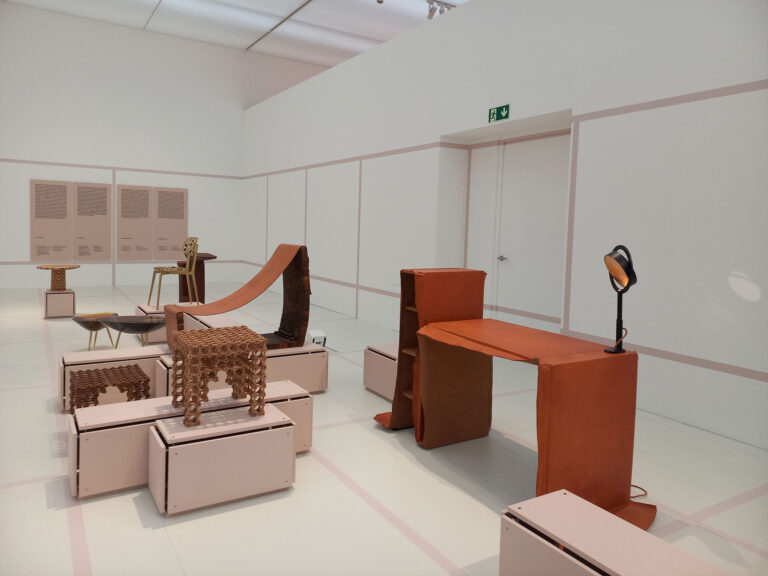
The Tessera Lounge Chair by Marc Baroud, a captivating representation of experimental furniture design. In a period when Marc Baroud fervently pushed the boundaries of experimentation in an intellectual manner, he conceived objects not merely for aesthetics, but as embodiments of intricate intellectual systems. The Tessera chair stands as a prime example of this approach, showcasing the mesmerizing interaction between leather and wood. Its ribbon-like structure adds to its aesthetic beauty, yet its design was not primarily driven by aesthetics; instead, it serves as a captivating system that highlights the power and potential of the material. The Tessera Lounge Chair is now in the collection of permanent collection of the Musée des Arts Décoratif, Paris.
Z.B. Can you tell us a bit about the publication of the accompanying book?
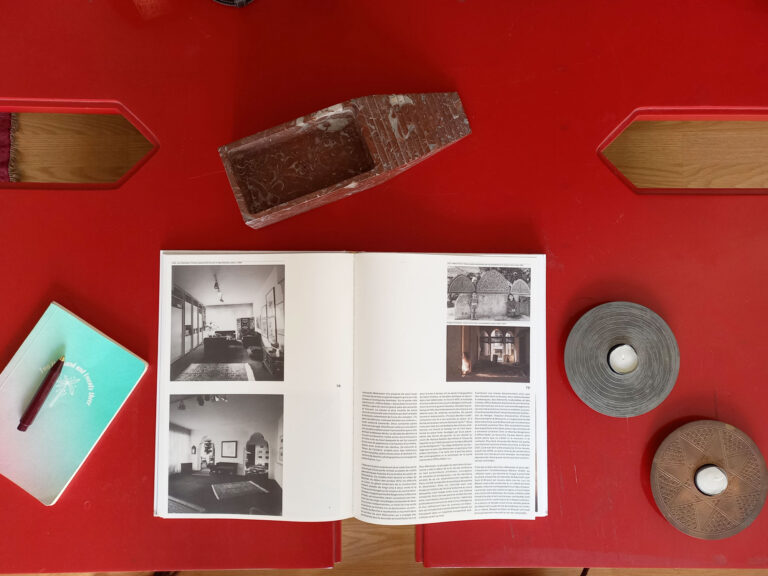
G.B. The book published by Kaph Books stands as the first and only comprehensive volume on design in Lebanon to date, making it an essential reference. One of its significant features is the meticulous gathering of creations from both the contemporary and historical periods. The book thoughtfully incorporates comprehensive texts on the historical era alongside insightful discussions on the contemporary period, making it a well-rounded resource. An engaging conversation about the place of design is also featured, involving three prominent individuals: Hala Abdel Malak, Cherine Magrabi Tayeb and Marc Baroud.
Additionally, the book offers a captivating chronology that traces back to the Ottoman era, skillfully juxtaposing historical events, cultural life, architecture, and design milestones. This chronology is not only present within the pages of the book but also thoughtfully displayed in the exhibition. It serves as a fascinating passage bridging the historical and contemporary periods, enriching visitors’ understanding of the evolution and significance of design in Lebanon. As a result, the book becomes an indispensable companion to the exhibition, capturing the essence of design’s journey through time and its profound impact on Lebanon’s cultural landscape.
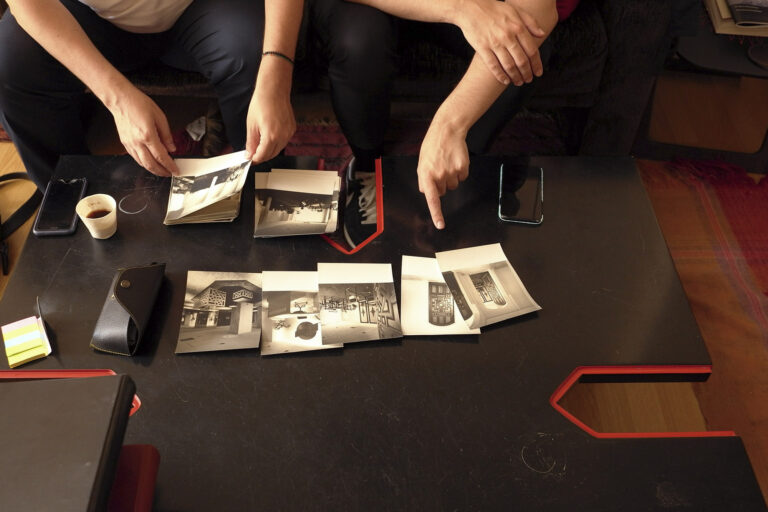
Z.B. Back in 2021, over our habitual breakfast at Souk el Tayeb, the upcoming exhibition was the talk of the town. Participating designers, doing their Saturday grocery shopping, chatted excitedly about it, creating a buzz of anticipation and camaraderie.
G.B. Back then, Costantini and his assistant Rafael Santianez would visit Lebanon frequently, and during one of their stays near my studio in Hamra, they would often drop by for a traditional Lebanese coffee and to dig into the archives. Together with Carlo Massoud, we had the opportunity to explore the legendary Interdesign showroom, even managing to “borrow” documents and some leftover design pieces for the exhibition.
However, during this time, Lebanon was facing a gas crisis, and we struggled to find diesel to fuel our vehicles. Despite the challenges, we made our way to Biomass at the Massoud’s, experiencing the long queues and frustration of unsuccessful gas filling attempts.
On our journey, we stopped in Batroun to pick up Marc Dibeh. The coastal city was alive with excitement, resembling the vibrancy of Ibiza or Saint-Tropez, with expensive cars and exuberant individuals. Marco was utterly bewildered – one moment, we couldn’t fuel our cars, and the next, we were in a glamorous coastal dreamland. We all laughed and scratched our heads at the hilarious rollercoaster ride we were on!
Embarking on a road trip through the ancient cities of the Peloponnese was a journey of wonder and inspiration, leaving an indelible mark on Zenobie’s approach to product creation. Zenobie, a brand dedicated to tales and myths, found itself immersed in the very landscapes and stories that had shaped its identity.
The road trip through the Peloponnese began along a stunning coastal strip, with azure waters glistening under the sun. We indulged in fresh fish dishes from village to village. The flavors of the Peloponnese complemented the enchanting landscapes and ancient tales.
The road wound its way through coastal beauty and rugged mountains, leading to villages brimming with untold stories. As I gazed upon the ancient ruins of Olympia, I couldn’t help but imagine the bustling activity of the past, the grandeur of the Olympic Games resonating through time. It was as if the whispers of history echoed around me, breathing life into the pages of Jack Kerouac’s novel, “On the Road,” where the spirit of adventure and curiosity fuelled the hearts of wanderers.
Sparta, with its legendary military prowess, held a mystique of its own. We found ourselves drawn to an open-air bar, immersing in the rhythm of the city and delving into the tales of its powerful war tactics. The articles we found about the city on our telephones enriched our appreciation for this remarkable culture.
The journey brought us to the breathtaking Epidaurus open-air theater, a marvel of sound engineering that stood as a testament to the ingenuity of ancient civilizations. The experience was a vivid reminder that the brilliance of the past still holds valuable lessons for the present. As I scribbled in sketchbooks and notebooks along the way, the essence of these mythical cities seeped into my creative being, shaping Zenobie’s products with a touch of history and magic.
Road tripping, is not merely about reaching destinations but embracing the moments between. Stopping at picturesque sceneries, sipping coffee at local village cafes, and immersing oneself in the local language brought us closer to the heart of the Peloponnese. Each beachside stop allowed for quick, refreshing dips, grounding us in the beauty of the world.
It was a journey that fulfilled the words inscribed in the first biography of Zenobie as a brand when launched back in 2015, “It takes inspiration from myths and old tales from our land.” The magic of these ancient architectures, cities, and the people who once walked these paths permeated our work, infusing it with a timeless essence.

As the road trip came to an end, we returned with eyes filled with stars and ears resonating with the sweet sounds of waves and local chatter. The spirit of Jack Kerouac’s wanderlust lingered within, and I knew that this journey would forever shape the tapestry of Zenobie’s creations, weaving ancient myths and modern designs into an enchanting blend.
In the Middle Ages, astrologer-physicians held a prominent position in the medical landscape. These learned individuals believed that the movements of celestial bodies influenced the human body and its ailments. They carefully analyzed the positions of planets and constellations to diagnose diseases and prescribe treatments.
Bloodletting was a popular practice believed to restore the balance of bodily fluids. But wait, it gets even more intriguing! Astrologer-physicians would consult astrological charts to determine the most auspicious time for bloodletting. The alignment of the stars was believed to enhance the effectiveness of the procedure, proving that even bleeding had a touch of celestial magic!
Herbal Remedies and Planetary Potions.
Herbs and plants were the foundation of medieval medicine, and astrologer-physicians considered the influence of the planets when preparing their remedies. They believed that different herbs corresponded to specific planets and zodiac signs. For instance, using chamomile associated with the Moon to treat insomnia or harnessing the power of rosemary, attributed to the Sun, for memory enhancement. Mixing potions and aligning them with the stars was their version of brewing cosmic elixirs.
The Zodiac Man was a popular diagram illustrating the correlations between different body parts and the zodiac signs. It was believed that each zodiac sign governed specific areas of the body. For example, Aries was associated with the head, while Pisces reigned over the feet. Physicians consulted this whimsical chart to diagnose and treat ailments, ensuring the alignment of cosmic forces with bodily harmony.
- Aries: Head and face
- Taurus: Neck and throat
- Gemini: Shoulders, arms, and hands
- Cancer: Chest and breasts
- Leo: Heart and upper back
- Virgo: Digestive system and abdomen
- Libra: Kidneys and lower back
- Scorpio: Reproductive organs and bladder
- Sagittarius: Hips and thighs
- Capricorn: Knees and bones
- Aquarius: Calves and ankles
- Pisces: Feet and immune system
While the approach of astrology and medicine in medieval times may seem whimsical and eccentric by today’s standards, it exemplifies the human desire to seek connections between the cosmos and our well-being.
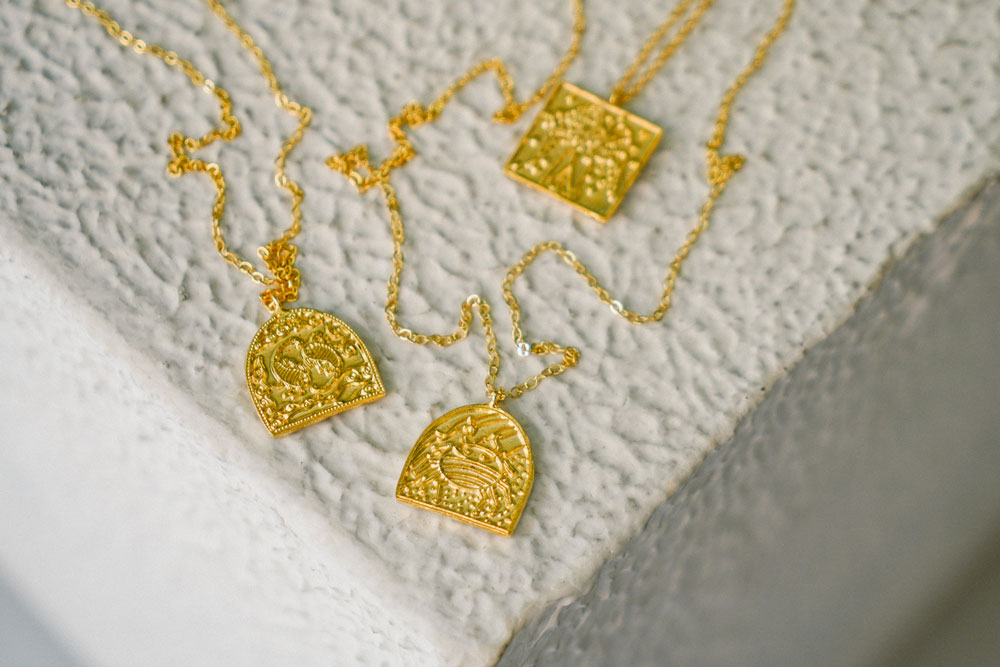
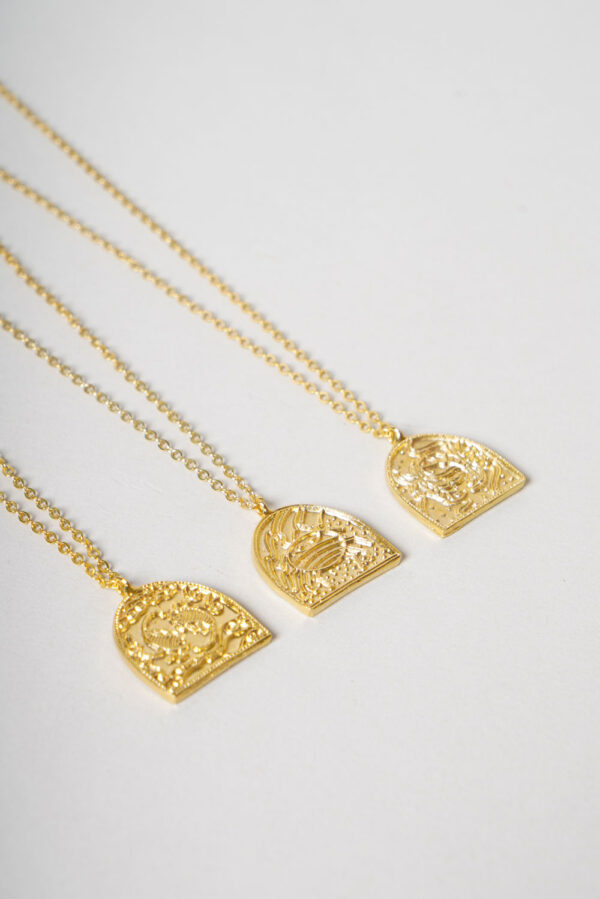
When seeking inspiration for Zenobie’s captivating Zodiac pendants, we embarked on a mesmerizing journey through the revered medieval times, where astrology held profound significance. Our goal was to capture the essence of our interconnectedness, akin to celestial stardust, by delving into the realm of zodiac signs and the mystique of the stars themselves. The artistic renderings of the signs crafted by Zenobie were an amalgamation of Arab and medieval illustrations, paying homage to the rich astronomical heritage shared by these cultures.
Zenobie’s collection of Zodiac pendants beautifully encapsulates the essence of each sign, effortlessly translating their cosmic symbolism into mesmerizing geometric shapes. Fire signs embrace the circular form, representing their passionate and dynamic energy. Air signs find expression in elegant ovals, mirroring their free-spirited and intellectual nature. The graceful arcs embody the fluidity of water signs, symbolizing their emotional depth. Finally, earth signs find their grounding in the sturdy square, embodying their practicality and steadfastness.
Adding a touch of enchantment, each pendant conceals a hidden message on its back—the profound words “We’re all made of stars.” This poetic inscription serves as a reminder that we are all interconnected, bound together by the cosmic symphony. It is through the guidance of the stars that we are reminded of our place in something grand and timeless, a celestial dance that unites humanity in its collective journey.
Zenobie’s Zodiac collection invites wearers to embrace their astrological identities while simultaneously celebrating the cosmic unity that transcends individual signs. Each pendant becomes a personal talisman, allowing us to carry a piece of the vast universe close to our hearts, igniting a sense of wonder and connection in our daily lives. So, adorn yourself with a Zenobie Zodiac pendant, and let the stars illuminate your path as you navigate the cosmic tapestry of life.